Every campaign is different; every need is different. And at NASSCO, this is a change they’ll negotiate.
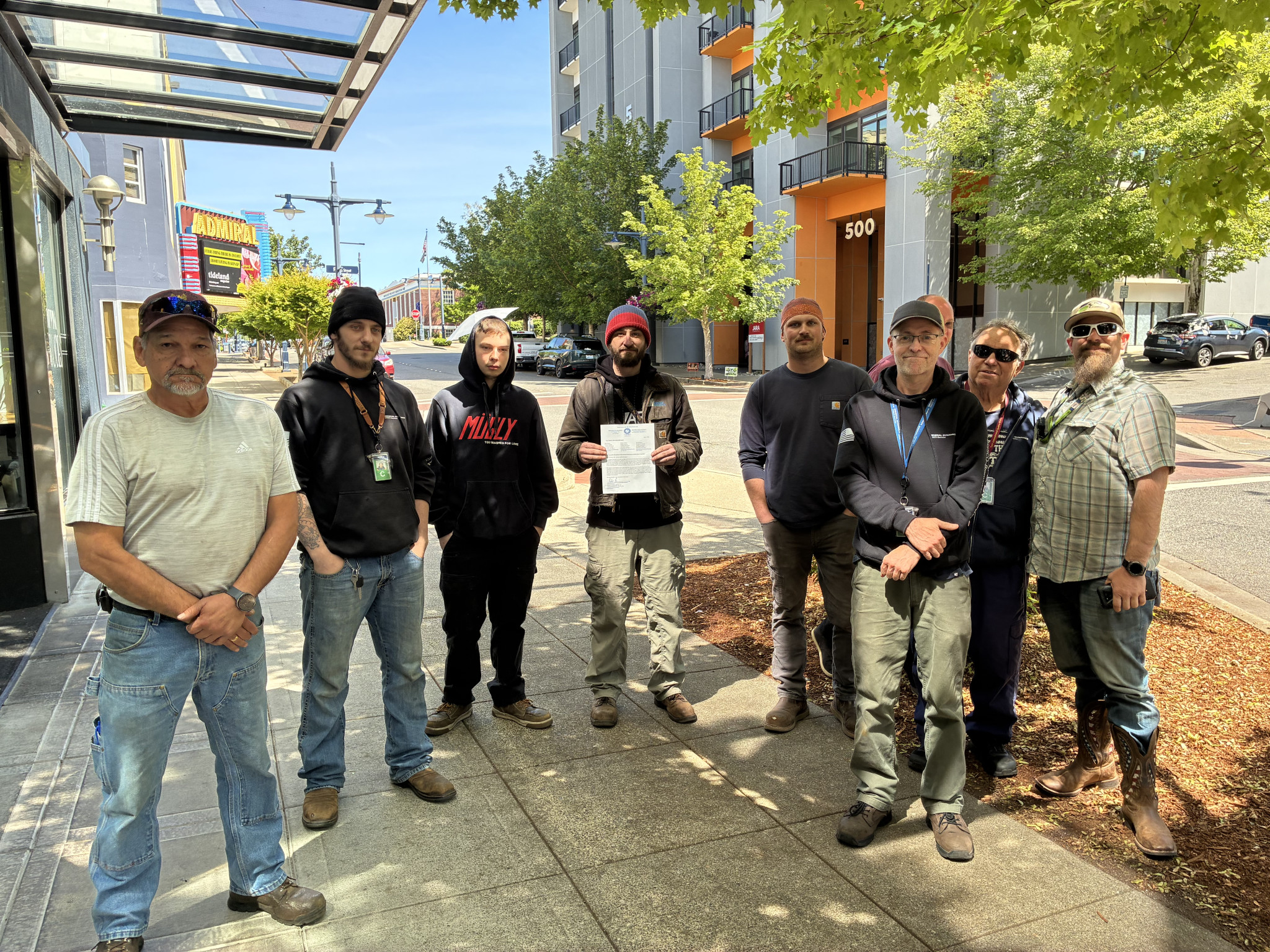
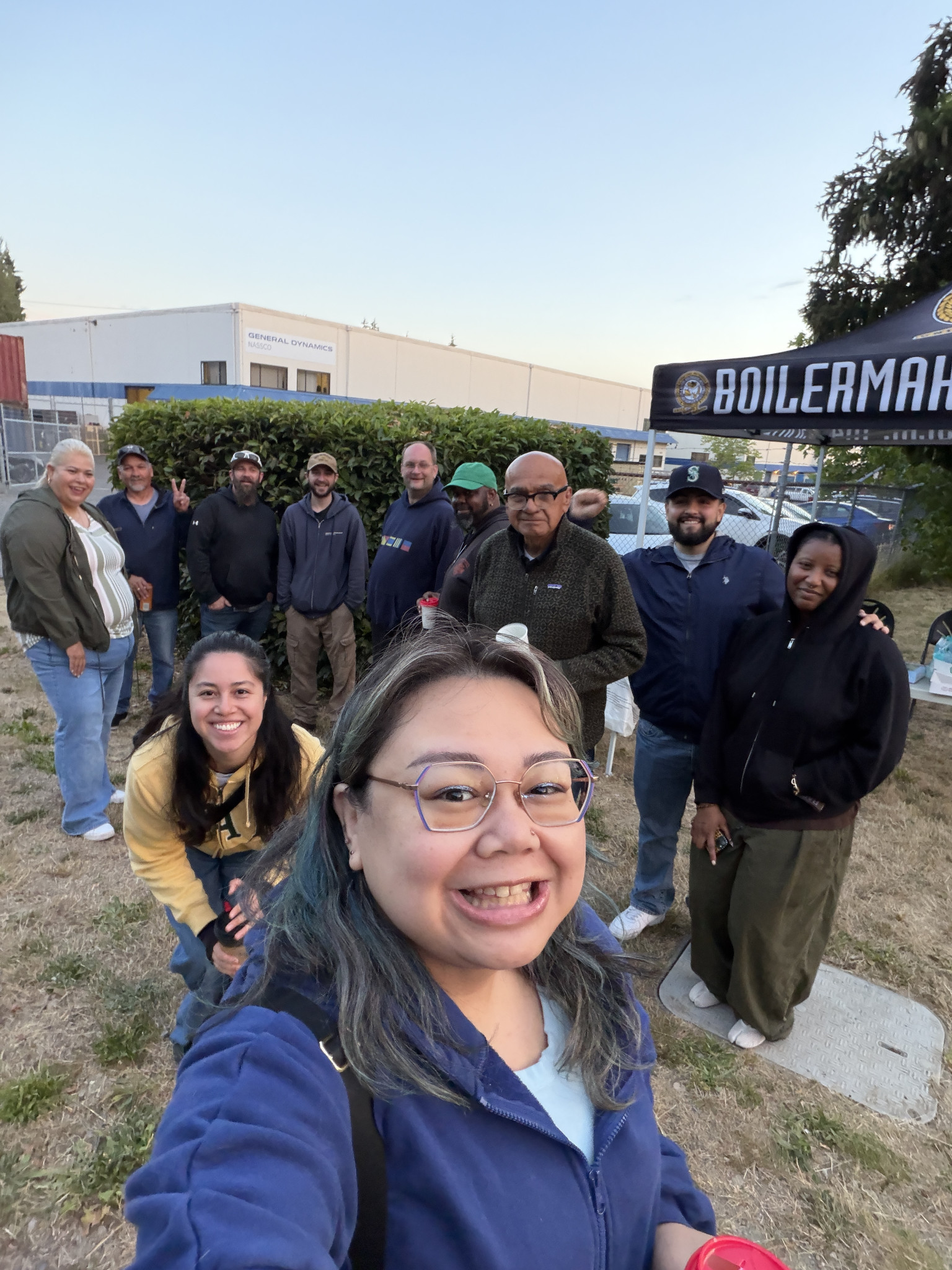
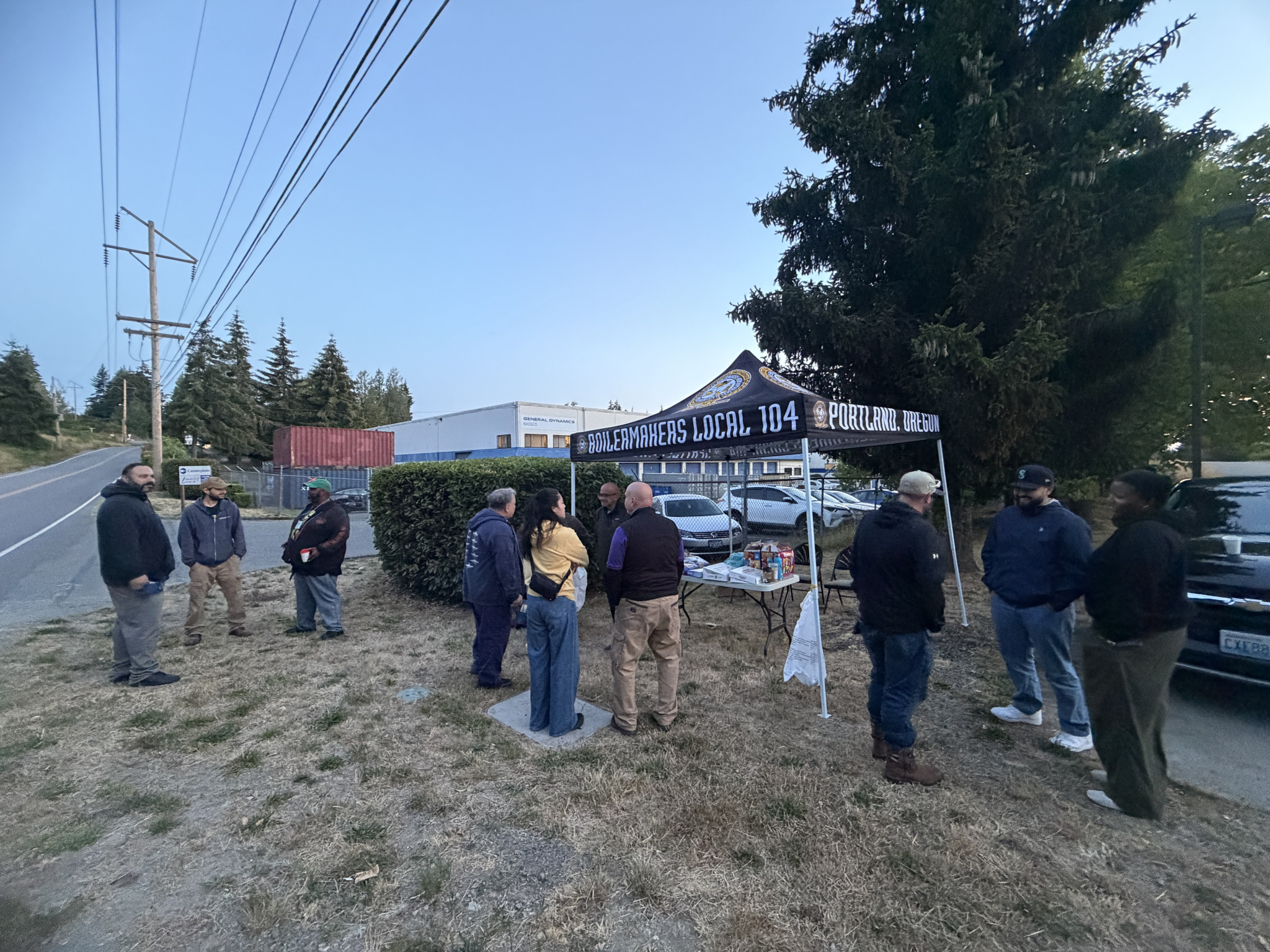
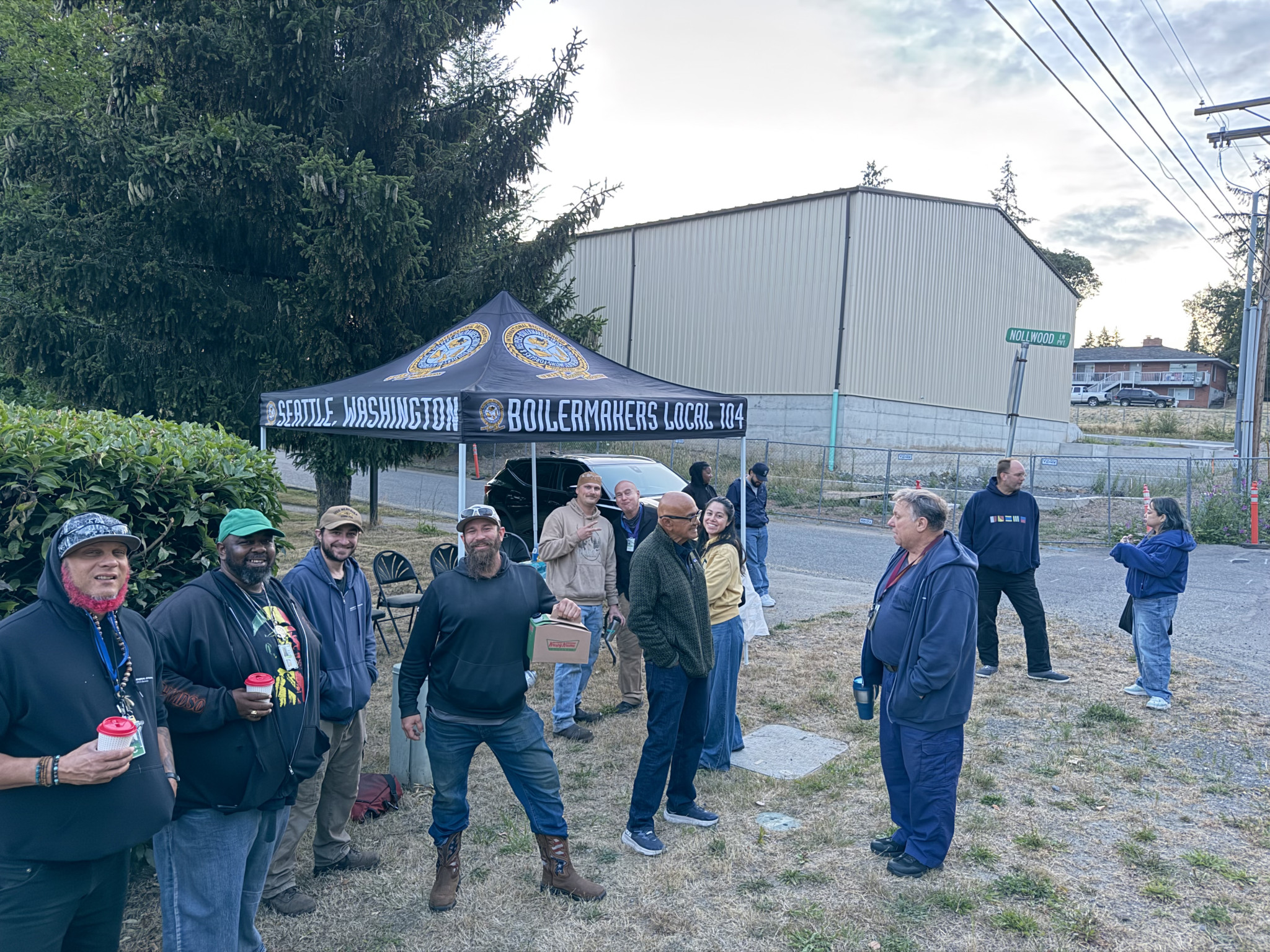
General Dynamics NASSCO workers prepare to file for election.
After just three months of a formal organizing campaign, workers at General Dynamics NASSCO in Bremerton, Washington, voted 24-12 in August, saying yes to joining the Boilermakers. The campaign’s success was part of a strategy that began with groundwork laid months earlier, seeded initially by NASSCO worker Robert Futch.
Futch knew the value of a union. He is a third-generation union man, worked 14 years as an Ironworker and, most recently, was a Local 104 (Seattle) Boilermaker at Pacific Ship Repair & Fabrication Inc. before it went bankrupt.
“I’ve known union my whole life, and I’ve seen both sides of the fence,” he says.
Which is why, after Pac Ship closed and he went to work in NASSCO’s nonunion environment, he quickly shared in his new coworkers’ frustrations. But he knew what to do: He reached out to his former Boilermaker lodge, calling L-104 Business Manager/Secretary-Treasurer Richie Browning.
“That was about a year ago,” Browning says. He had recalled Futch as a steward at Pac Ship. They agreed it was too early to act, but that Futch would begin taking stock of his new NASSCO ecosystem and check back in when he thought the time was right for next steps.
Some months later, Futch and Browning, along with L-104 Assistant Business Manager/organizer Rob Hodge and Gerad Low, another NASSCO worker who had previously worked at a L-104 facility, met to discuss the situation and put a plan together.
“We hashed out what the needs were at NASSCO since most workers had never been exposed to a union,” Browning says. “They already had a list going for us.”
And they got started pulling basic intel together which they provided to the Martin Luther King Jr. County Labor Council’s Seattle People’s Organizing Center. L-104 is affiliated and actively engaged with the MLK CLC, and the Seattle POC is an innovative program that brings national and local union presidents together to fund and pilot strategies for organizing and workforce development.
Then, it was time to call in the Western States organizers including Director of Western States Organizing Manny Valenzuela and organizers Eddie Rodriguez and Blanca Aguilar.
The organizing team worked to show interns at MLK’s People’s Organizing Center how to run analytics to obtain the layout of workers, networks of who knew who, identify how many fulltime and temp workers were on site, identify management and gather other useful information.
Then the organizers kicked off the tactical part of the campaign, connecting as quickly as possible with workers through regular parking lot visits and text messages, and most importantly by building trust through all means of communication.
“For the most part, people wanted this, but they were scared,” Futch says.
Being physically present and available to answer questions was vital. In addition to stationing themselves in the NASSCO parking lot, the organizers also scored a local office thanks to Browning’s connections with SEIU Local 925, which offered the Boilermakers their space.
“The communication and the bond we build is a must in organizing,” says Aguilar, who saw the campaign through to the vote as Valenzuela and Rodriguez were called to other campaigns. “You have to build that bond and trust with the workers.”
She says Futch was instrumental in making that happen on the inside. More than once, he stuck his neck out to support coworkers individually: helping write a letter to negotiate a higher pay rate, standing up against improper disciplinary actions and getting them rescinded, advocating to help someone get a promotion.
“Every time, I made the point to say: ‘This is just me, but what I just did is what it’s like when there’s a union. Imagine if we had the backing of a union,’” he says.
The Boilermakers’ proven track record representing NASSCO workers in San Diego also helped gain workers’ trust in the union. Some Bremerton workers had previously worked in San Diego and knew their wages were higher.
“When workers would bring up San Diego’s union representation or advantages those workers had, we used that,” Aguilar says. “We could say ‘So, how come they’re represented and you’re not?’ And they talked about the differences.
“When they would point out that San Diego workers are making more, we said, ‘Yes, because you’re letting them,’ and we talked about how contract negotiation works and how when they organize, it’s their union—they get to decide what they want.”
Reason had an effect on naysayers and against fear. But Futch says some people were simply too afraid to even talk about the union. Some kept their distance from him since he was vocally pro-union and, as he describes, “public enemy number one with the company.” Some warned him he was going to be fired. He used that opportunity to talk about union protections, laws and logic.
“I’d tell them if anything, I should be fired by now, shouldn’t I? But I’m not,” he says. “I think that helped when I pointed out that I’m still there and employed.”
Futch says it wasn’t easy, but every little bit helped.
He recalls one moment in the campaign, standing in the rain waiting for people to finish their shift so he could talk with them. It was pretty miserable.
“I got to thinking about how my grandpa and the generations before were dying in the streets for these union rights. And I can’t even just stand out in the rain? That helped me through,” he says.
By the time voting day came around, Aguilar says workers were noticeably more secure. The Boilermakers brought coffee and doughnuts for everyone—including management. Some workers who had been too fearful to associate as pro-union even wanted their pictures taken with the organizers. She describes one young NASSCO worker who especially made an impression on her when he volunteered to be a vote observer.
“Without knowing anything, he took the reins and said, ‘I’m bringing it home.’ He wanted to be there for the vote count, because he was ready for change,” Aguilar says. “Every campaign is different; every need is different. And at NASSCO, this is a change they’ll negotiate.”
Futch looks forward to a new union future. His experience organizing at General Dynamics NASSCO opened his eyes to a different perspective on what it means to be part of a union.
“I know it’s tough, but give back and get at least a little bit involved,” he says.