You are the foundation of training. Apprentices trust you. You’re the ones to teach them how to be the right kind of craftsmen.


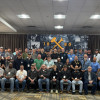
Boilermaker National Apprenticeship Program instructors from lodges across the United States gathered Sept. 15-17 in Oak Lawn, Illinois, for three days of training focused on strengthening apprenticeship programs and preparing the next generation of Boilermakers. Mark Wertz, BNAP National Apprenticeship Coordinator, opened the conference by emphasizing the critical role instructors play in the development of apprentices.
“You are the foundation of training. Apprentices trust you,” Wertz said. “You’re the ones to teach them how to be the right kind of craftsmen.”
Wertz said BNAP works closely with regional apprenticeship coordinators to ensure apprentices receive consistent, high-quality training throughout their careers. “Every time we do something we run it by the area coordinators,” he said. “This is a travelling trade. We want apprentices to have the same training. That’s the goal here.”
In addition to teaching, the conference included testing for two EPRI modules, safety training, first aid and updates on the Learning Management System 3.0, with a focus on understanding how younger apprentices learn. Wertz discussed videos he’s produced while traveling throughout the Brotherhood, noting that the material can be also used by local programs for recruitment.
“We’re all recruiters,” Wertz said. “Our goal this week is to give you as much information as possible so you can take it back to the apprentices.”
Chairman of the BNAP Board of Trustees Mike Bray underscored the instructors’ importance to the future of the Brotherhood. “You are on the front line of the future for the Boilermakers,” Bray said. “You’re teaching younger people coming through the ranks. It’s important we have people like you teaching our apprentices.”
With the industry facing a shortage of skilled workers, Bray said it is imperative that the Brotherhood develops and retains quality apprentices.
MOST Administrator and Health and Safety Director Mark Garrett discussed the culture surrounding mental health in the construction industry and the reluctance some workers may have to acknowledge when they are struggling.
“Guys especially don’t want to admit we have an issue,” Garrett said. “We don’t want to appear weak.”
He described the toll that demanding construction schedules can take on workers. “Before I came to the Boilermakers, I used to do a lot of field construction. You figure you work five months straight of 12s—it takes a toll. The stress builds up.”
Instructors do not need to be therapists to make a difference. “You just need to know when someone needs help,” he said. “You don’t need to fix anything; you just need to show up.”
Recruitment was another major focus with Kevin Stewart, Great Lakes Area recruiter/organizer and Lee Aurand Hosey, SAJAC recruiter, sharing strategies for reaching potential apprentices. They encouraged instructors to look beyond traditional recruiting events and build relationships wherever prospective apprentices can be found such as welding schools, vocational programs, college and career fairs, SkillsUSA, FFA and other educational settings.
They emphasized that Boilermaker trade ambassadors need to be personable and willing to share their own experiences.
“You’re the face of the trade,” Hosey said.
Competitions also can provide an avenue for connecting with students and educators. Hosey discussed the opportunities created through partnerships with schools and organizations such as TVA, including bringing students together to see the job possibilities available in welding and the skilled trades.
Recruiters were encouraged to be honest about the realities of the trade, including travel, pay, job duties and workplace culture. Just as important is staying connected with students, schools and educators after an initial recruiting event.
Stewart acknowledged that some recruiting events can initially feel unsuccessful. But repeated exposure can pay off months or even years later. “People wonder why no one knows what a Boilermaker is. It’s partly our fault. We didn’t used to attend these events,” Stewart said. “If they don’t know who we are, they’re not going to mention our name.”
Wertz reinforced the message: “Don’t beat up the other trades. Just sell the Boilermakers.”
Teaching across generations
Brenda Said-Wright, owner of the Great Lakes Educational Group, challenged instructors to consider how changing generations learn. “You’re not teaching if no one is listening,” she said.
Today’s apprentices have grown up in an environment of instant information and gratification, creating new challenges for instructors accustomed to traditional teaching methods.
The answer, she said, begins with understanding the people in the room. Instructors need to know their audience including a student’s background, experiences and circumstances, and adapt their teaching approach accordingly. Said-Wright outlined four elements that should be part of every class:
Why: Apprentices need to understand the why behind what they’re learning.
Experience: Apprentices need to learn by doing and experience “productive struggle,” allowing them to recognize small victories along the way.
Problem-solving: Apprentices should be encouraged to identify problems and figure out what went wrong rather than being told.
Value: Learning should have immediate relevance.
Said-Wright also encouraged instructors to make learning personal, have students work together and create opportunities for them to reflect on their own progress.
The conference carved out time for instructors to share experiences during an open forum to learn from one another so they can return to their lodges with new tools for recruiting, retaining and training apprentices.
In closing, International Secretary-Treasurer Clint Penny told instructors they make a lasting impact on the apprentices they teach and mentor. “I remember every trainer I ever had. Those guys showed me. They were like my own father,” he said. “You are the guys that train the people. Thank you for what you do and the work you put into this.”
BNAP Coordinator Mark Wertz announced Instructor of the Year recipients
for each United States region:
Northeast
Scott Burke
Local 29
(Boston)
Great Lakes
Dylan Rangeloff
Local 647
(Minneapolis)
Western States
Andrew Jones
Local 4
(Los Angeles)
Southeast
Thomas Bryars
Local 110
(Hattiesburg, Mississippi)
Wertz also recognized Local 374 (Hammond, Indiana) for the most EPRI evaluations given across U.S. lodges.