I’m proud to be making a union-made product here in the United States, serving our customers in the United States with a product that helps transport the critical energy we need.

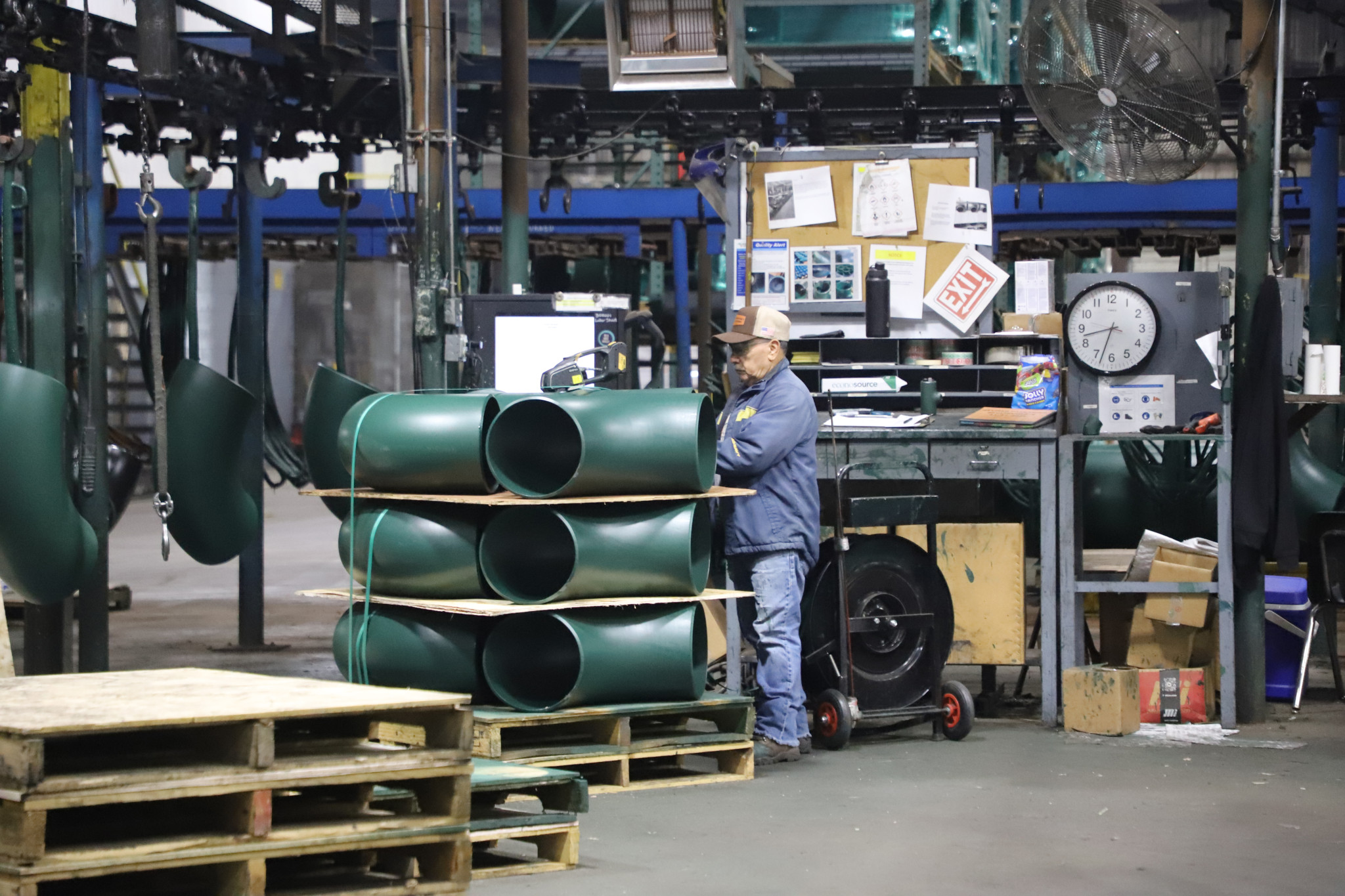
Hackney Ladish’s signature green fittings are palleted and ready to load.
View Photo Gallery (5 photos)
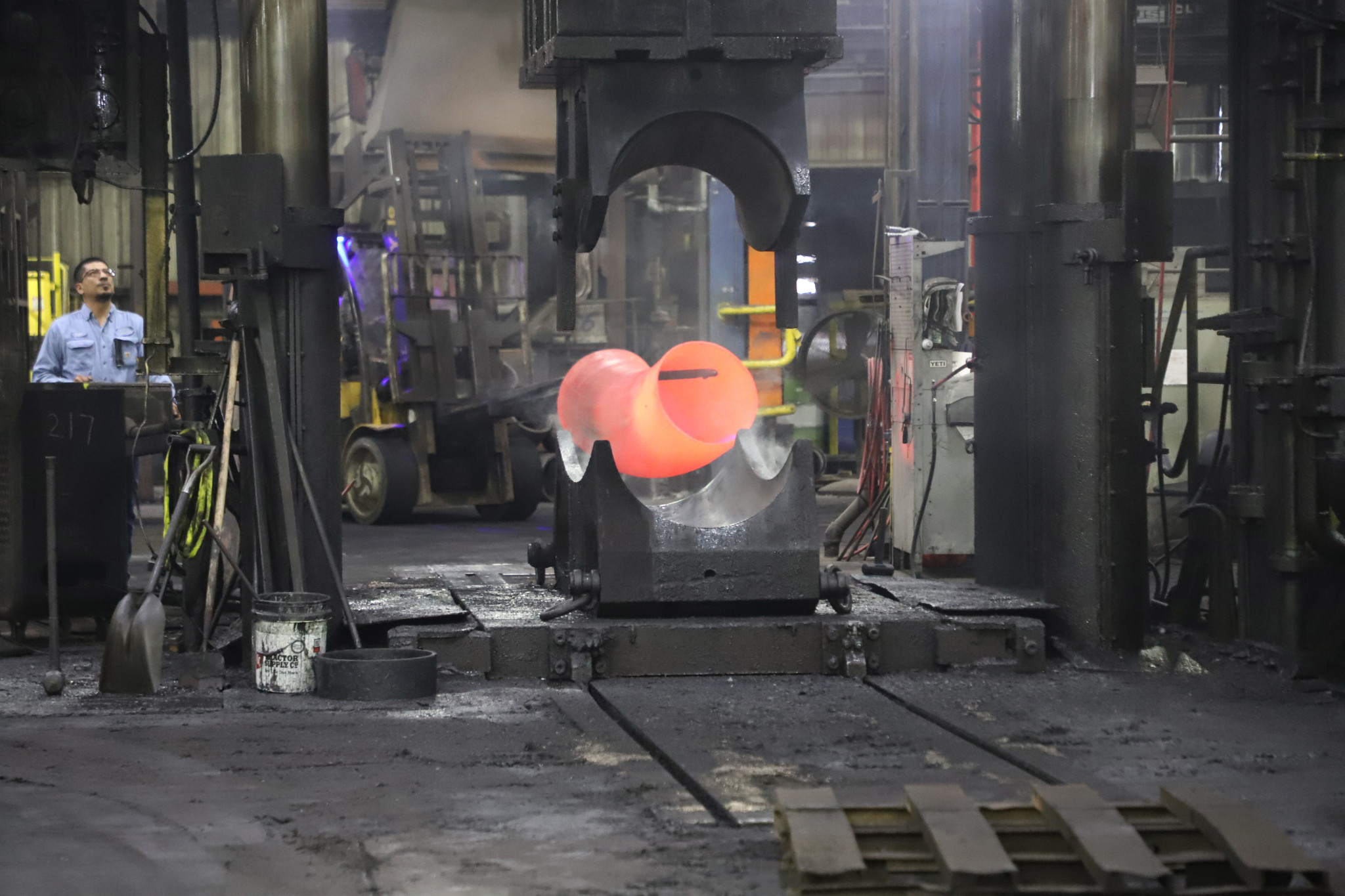
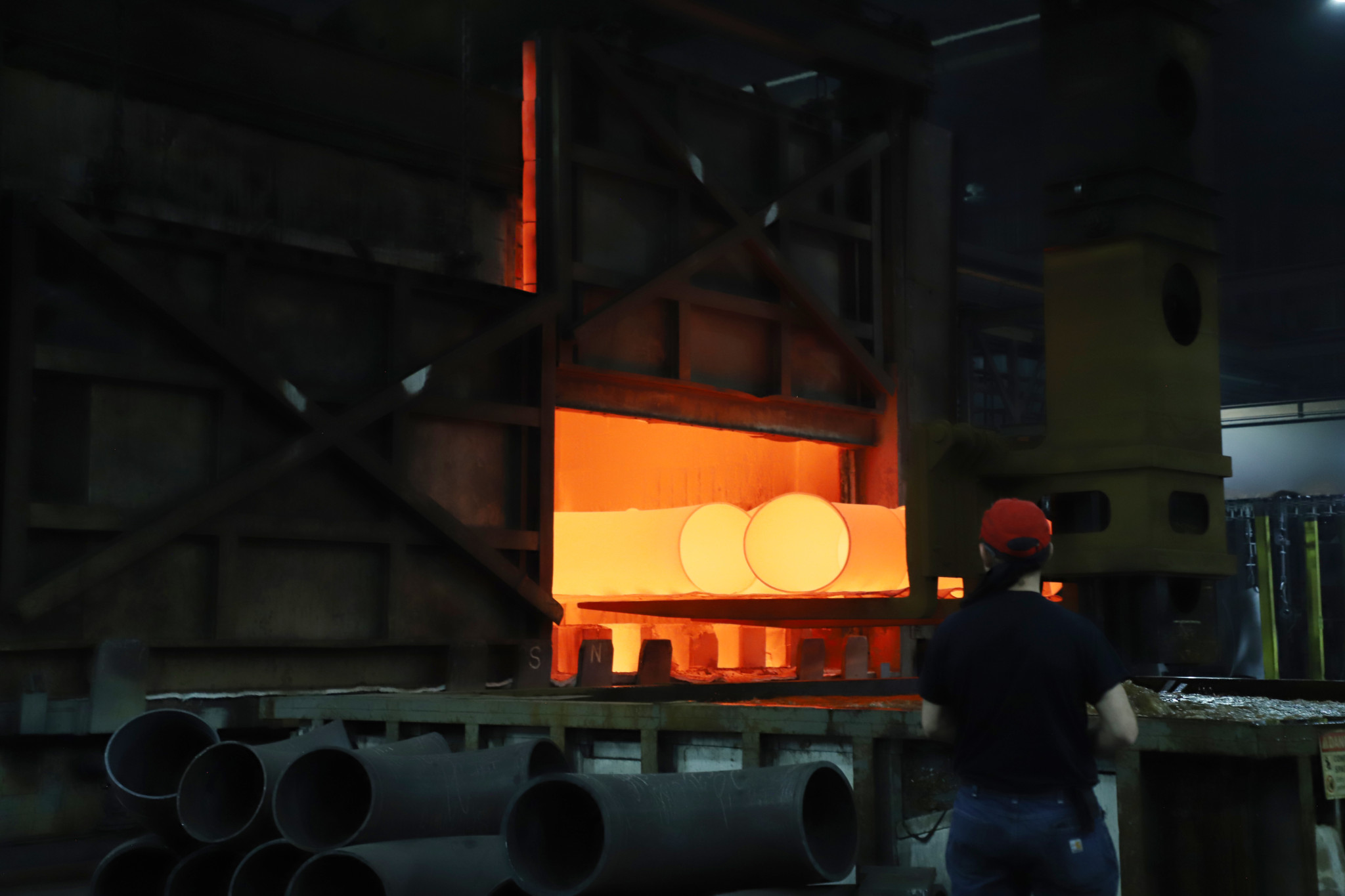
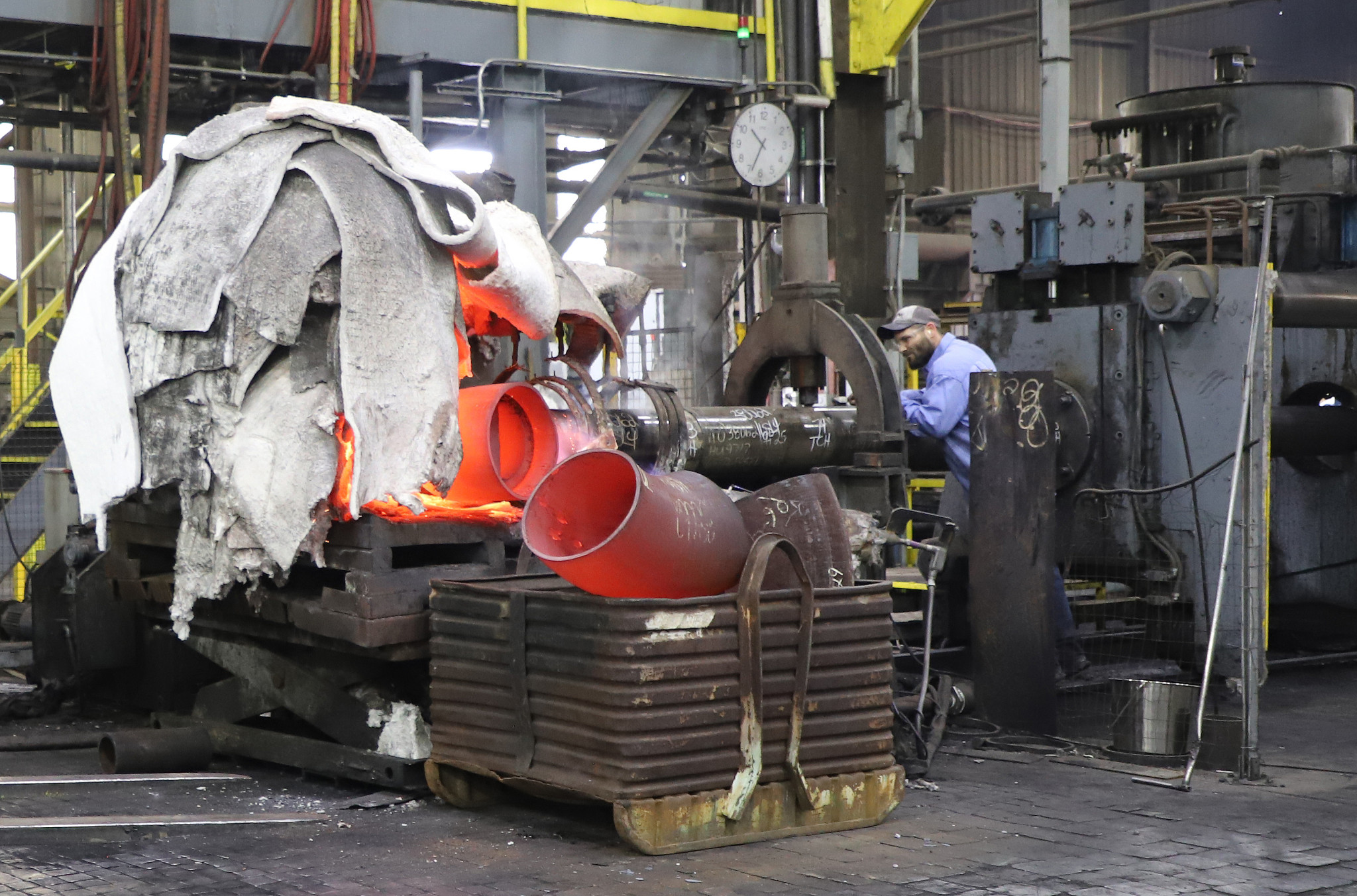
Business is booming and the future is bright at Hackney Ladish in Russellville, Arkansas. There’s a positive vibe across the 380,000 square-foot-facility where Local 1510 (Russellville, Arkansas) Boilermakers make a line of weld fittings—elbows, reducing elbows, tees, reducing tees, concentric reducers, crosses and caps in a wide range of sizes, 48-inch and down, in carbon and high yield steel. All painted a signature green that means it’s a quality, domestic product—emphasis on quality.
The place is abuzz with activity, and the Boilermakers maintain a constant pace to keep up with customer orders and make sure inventory is on hand, ready to go out. Two shifts are chock full of work, overtime is plentiful and new hires are a regular thing as orders tick steadily up. Temp jobs typically transition to full-time union careers, and there’s talk that a third shift and more jobs may be on the horizon.
But things didn’t always look so good. Just a few years ago, the workforce at Hackney Ladish had shrunk from around 150 Boilermakers to 44 as the company struggled through a downturn under former management.
“We didn’t know if we’d have a job the next day. We were guessing if we were going to have product coming in,” recalls Terry Honeycutt, L-1510’s president. “We were down to working just three or four days a week, eight-hour days. I mean it was really starting to look slim.”
Not surprising, morale was down.
But then the Allied Group of Companies purchased the company and offered a glimpse of hope.
“They said, ‘We’re going to sell your product, we’re going to get your parts up. We just need you to trust us. Keep putting the effort into making the product, and we can (sell it),’” Honeycutt recalls.
Todd Miller, National Sales Manager for the Allied, says the quality of the product made by Boilermakers at Hackney Ladish is a big part of what attracted the Allied Group of Companies.
“Quality for us, being a global company, is really important in every single thing, in every single part of the Allied Group of Companies,” he says. “Knowing this is a Boilermaker-made product—that there’s a union behind this product—was very enticing to us because we know it’s going to be a quality product and there’s a group of quality laborers right behind the product.”
It was a good product Allied knew they could sell. As a global supplier and the largest pipe, valve and fitting master distributor in North America, Allied saw the potential for a perfect fit. They just needed enough product to sell.
“The previous owner was from the aerospace sector, so they knew they had to keep up with the machines and take care of the quality and not skimp on raw materials. So, the product wasn’t the issue,” he says. “The selling of the product was—and having material readily available.”
The company asked the Boilermakers to be flexible and help get things ramped up.
“So, we started doing that,” Honeycutt says. “We were flexible about the jobs we were doing with 40-some people here going from job to job.”
It was all hands on deck, no matter what it took; without, that is, sacrificing quality.
“Allied saw the effort we were putting into it, and then they started hiring people, bringing more people in and making changes,” he says.
And as those changes began to take shape at Hackney Ladish, the future looked more and more optimistic. The company worked with new employees and took time to really get to know the existing workforce, and, Honeycutt says, people felt like they were treated like family. Plus, he says, the company understood that workers were there so they could take care of their own families.
“So that made everyone feel more secure and proud to be here. We wanted to work and show them that we could produce,” he says. As the Boilermakers continued to invest themselves in their work, Allied invested in their workforce at Hackney Ladish.
“They had confidence in us and started bringing in more equipment, new equipment and making more jobs for everyone,” he adds.
That was two years ago.
“It’s really turned around,” he says amid the hum of activity.
The quality of the product made by L-1510 members doesn’t just impact company sales, it impacts lives. The fittings they make go into pipelines across America that feed pressurized substances such as water, oil and gas underground, beneath cities, towns and homes, as well as into systems that supply city businesses, schools and hospitals. They even feed into the refineries and power plants Boilermaker construction sector brothers and sisters build and maintain.
“You don’t think about it until you start walking down the street and you see these elbows or fittings that you helped produce. It goes through everything people use in this world; everything that makes the world go ‘round,” Honeycutt says. “You want the products going out there to be safe, because it affects not only my family, but your family.”
While some of the product is sold overseas, most is sold in the U.S., Canada and some in Mexico.
“Our product is American-made by union workers,” says Brian Byrum, General Manager at Hackney Ladish, who started at the company as L-1510 Boilermaker working in production. “I’m proud to be making a union-made product here in the United States, serving our customers in the United States with a product that helps transport the critical energy we need.”
From shaping the flat metal to shrink wrapping and shipping the final product, most of the hands involved in the process are Boilermakers’ hands. International Rep Mitch Beasley says union density is well over 90%, the highest it’s been in years. That’s no small feat in a right-to-work state like Arkansas.
“It’s the faithfulness in the Boilermakers,” Beasley says. “It has grown, because people are putting faith in the union here. It’s exciting.”
There are currently 94 Boilermakers at Hackney Ladish, and the number is growing. L-1510 has shown how being part of a union makes a difference, and the mutually respectful relationship between the union and the company stokes a good work environment.
Honeycutt says building the relationship began when Allied first came to the table with the union to discuss their contract.
“A lot of times, you’re head-to-head, but Allied came to the table with an open mind. They wanted their employees to be happy,” he recalls. “They wanted to show that they cared about the people, and they offered great benefits for years to come.”
There’s a common theme among workers that they feel sense of belonging to something bigger than the individual job they do and that they are cared for by the company and the union.
Byrum worked for the previous owner, left, and then returned after Allied purchased Hackney Ladish. While no union/employer relationship is perfect, he says good relationships, mutual respect and happy employees translate to the quality of the company’s product.
“When everybody gets along and works together and are treated like family, everybody wants to come to work. They don’t dread coming to work,” he says. “It’s not just for the paycheck, it’s for your brother or your coworker or your teammate beside you that you enjoy spending time with. It’s not a grind. And all that equates to better quality, better safety, better production, and that just helps us in everything we do here.”
Machine specialist David Hood agrees.
“When the union and company come together, you make a better product and you want to do good for the company because you want the company to do good for you,” he says. “They have been really a good partner for us and have given us more opportunities to be able to do more for our families.”
Hackney Ladish has been a staple in Russellville for over 50 years, and jobs there have always been coveted. Many family connections and multiple generations are scattered throughout the production process, and when someone lands a job there, they tend to hang onto it. There isn’t a lot of turnover.
Honeycutt has worked there for 30 years. His twin brother Jerry Honeycutt also works for Hackney Ladish. He’s had nephews, cousins and a son work there.
“It’s basically a tradition. It carries on through your family because it’s such a good place to work,” he says.”
Hood has worked there for more than 40 years, and it took him multiple tries to get an interview for the job because there was always so much competition.
“It was hard to get a job here even back then,” he says. “A lot of people like to stay. It’s a good place to work, because you’ve got a future. They’ve got a lot of product to run. It makes you feel good that you’ve got something to look forward to.”
Dusty Johnson is newer at just a year and a half at Hackney Ladish. He runs the monster heat treat machine and found the job through his father, who works there. His brother and nephew also work there. He says he enjoys being able to see his relatives at work but also feels like he’s gained brothers in the union.
“We all work together and we’re all wanting the same goals accomplished,” he says.
Likewise, Sarah Smith is newer on the job and has family at Hackney Ladish. She’s worked in the shipping department for about a year.
“There’s just not a lot to not like about working here. I enjoy it. I enjoy the people I work with. I enjoy the money I make,” she says. “Seeing what parts we’re producing and what they’re for really helps build a sense of pride in your work. It helps you feel like you’re doing something important.”
Allied’s investment in a positive environment, the company and the Boilermakers’ mutual respect and the Boilermakers’ loyal commitment to quality at Hackney Ladish has paid off. Today, the facility runs six to seven days a week and the warehouse is stocked. The collective attitude is decidedly a good one. A forklift operator even sings a loud, happy tune as he makes his way across the floor. That’s a normal Thursday at Hackney Ladish these days.
“Allied really stepped up and made me feel like I was part of something,” Honeycutt says. “They want you to work hard, do what you’re supposed to do and do a good job. They’re family owned and so they make you feel like you’re part of the family. And it makes a good atmosphere and a better workforce.”
“We’re all in it together,” Byrum adds. “We’ve got one job to do. We’re making a product—a critical product for the United States—and we’re just in it together as a family.”