Let the dead past bury its dead and let the living look into the future and let there be peace and goodwill toward each other.
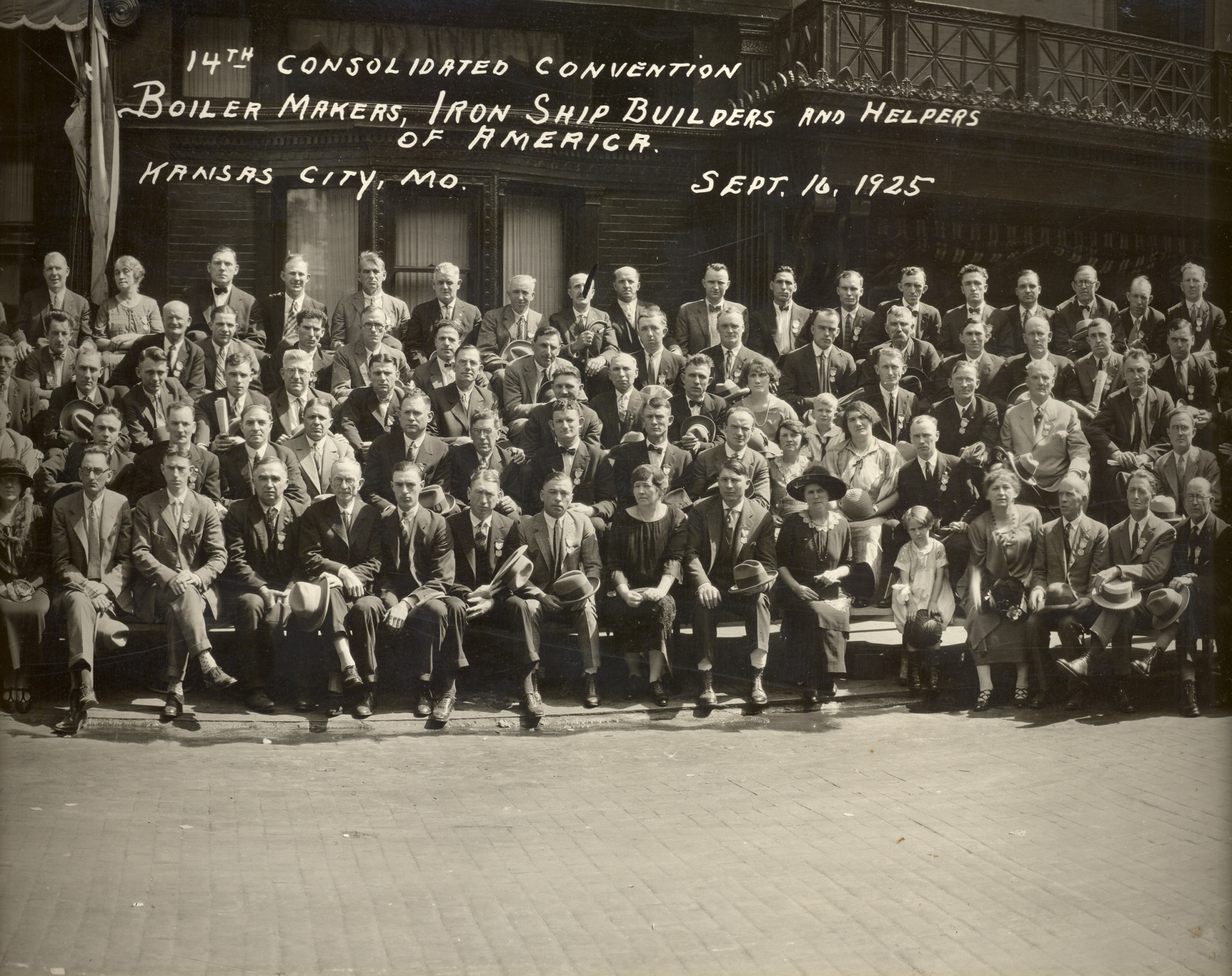
14th Consolidated Convention in September of 1925.
In 2026, the International Brotherhood of Boilermakers will convene its 35th Consolidated Convention, continuing a storied tradition that began with the union’s first convention in Milwaukee on June 4, 1894. While much has changed in the more than 130 years since that first gathering, one essential bond endures: the fellowship and purpose of brothers and sisters which unites Boilermakers across generations.
That spirit was evident at the Fourth Consolidated Convention, held in early July 1900 in Kansas City, Kansas, when Grand President John McNeil delivered his opening address. His remarks captured the purpose of the union in its early years, which was to support working men in their struggle for fair wages, reasonable hours and safer working conditions.
McNeil reviewed recent strikes undertaken to establish a nine-hour workday, improve safety and secure fair pay. He said 90% of actions proved successful, while others were costly. He described the strike in Bay City, Michigan, as “disastrous,” noting that it forced the employer out of business and nearly closed the local lodge. At the same time, many of the strike efforts achieved meaningful gains, particularly in reducing working hours. Some strikes had been authorized by the International, while others were not. That distinction, along with other issues, reflected ongoing internal disagreements.
Those tensions, rooted in what appears to be disputes over strike strategy and union governance, carried into the Fourth Consolidated Convention itself. Acknowledging these divisions, McNeil closed his address with a call for unity and perspective:
“In conclusion, let me say that never in the history of the Brotherhood have we been more powerful, more prosperous or more respected than we are today. Our strength commands the attention of our employers and fellow toilers, who are not with us in this Brotherhood. In framing laws and resolutions, be ever mindful of the Brotherhood. The past has nursed resentments that were not always harmonious. Let the dead past bury its dead and let the living look into the future and let there be peace and goodwill toward each other. When criticizing our actions, forget not that we are human and remember that the path of humanity is rough with errors.
“I extend the most hearty welcome to you all and pray that harmony will prevail and the wisdom of this meeting shall be a shining light to guide us in the future. And that the most glorious memory of your life shall be the meeting in Kansas City, Kansas, of the great Brotherhood of Boilermakers and Iron Ship Builders of America.”
As the union and its members prepare to gather once again, McNeil’s words resonate as strongly in 2026 as they did in 1900. His call to lay aside old resentments and look toward the future remains a guiding principle; for the future of the Brotherhood is yet to be written.