This victory is the result of persistence, energy and solidarity.

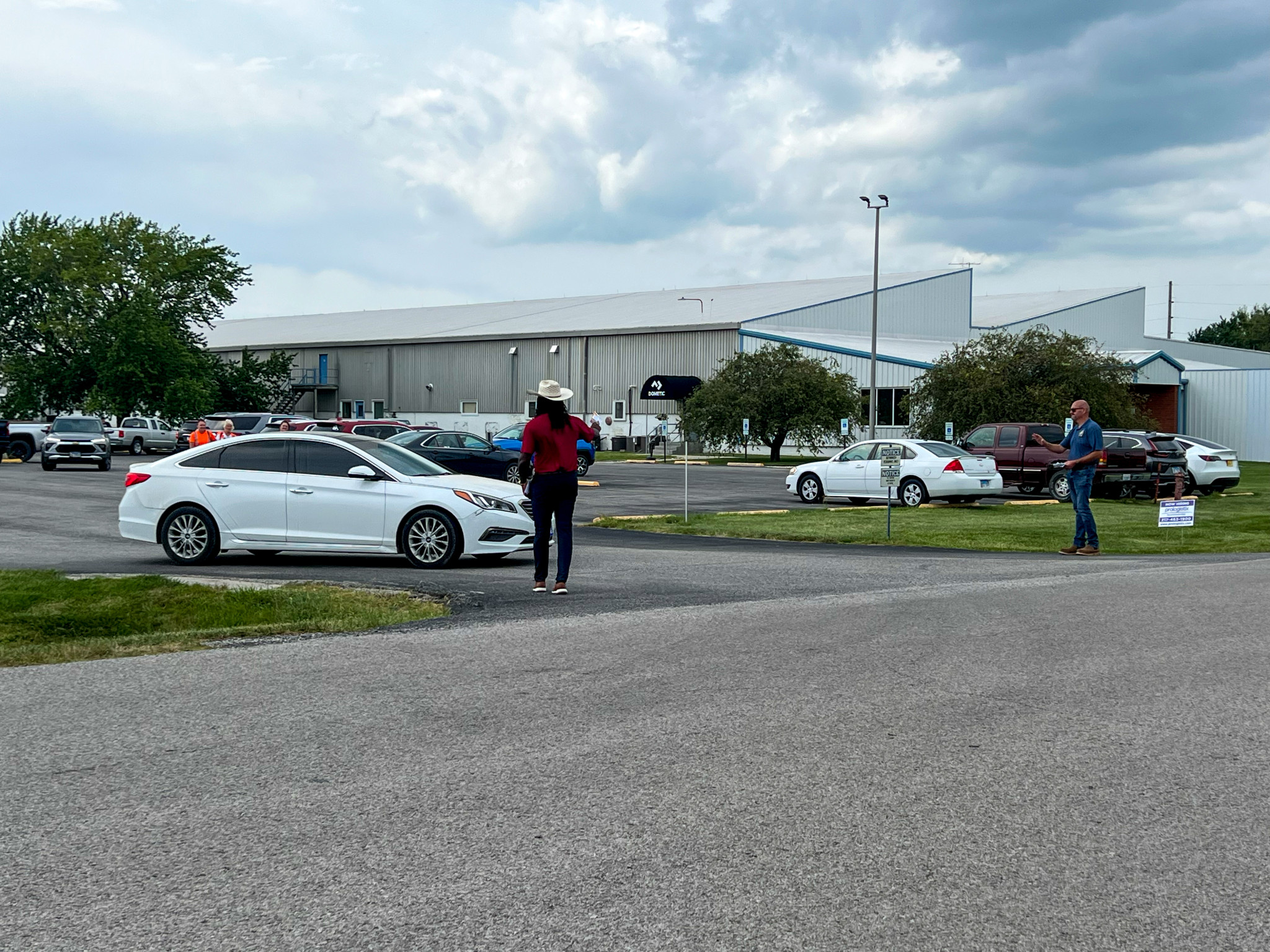
Boilermakers celebrate after spending the summer organizing at Dometic, l. to r. Director Cement Lodge Services Steve Adair, GL M.O.R.E. WIF Organizer/Recruiter Kevin Stewart, SE M.O.R.E. WIF Organizing Coordinator Carlos Brooks, L-363 Training Coordinator/Recruiter Nick Myres and IR Ryan Mroz.
In a spirited union drive that spanned the summer, workers at Dometic in Litchfield, Illinois, voted 55–43 in favor of joining the Boilermakers. The Sept. 9 vote secured union representation for more than 100 eligible workers at the company’s two facilities, which serve as a distribution hub and light assembly operation for outdoor products.
International Rep Ryan Mroz spearheaded the campaign with support from members and organizers, including Carlos Brooks, Southeast Organizing Coordinator for the M.O.R.E Work Investment Fund; Kevin Stewart, Great Lakes M.O.R.E. Fund organizer/recruiter; Local 486 (Litchfield, Illinois) President Mike Tiemann; members of Local 363 (East St. Louis, Illinois) and Local 158 (Peoria, Illinois) and an attorney from SERT, the Boilermakers Special Emergency Response Team and International staff.
“This victory is the result of persistence, energy and solidarity,” said International President Timothy Simmons. “Ryan went above and beyond his duty as an International Rep. He embodied the same spirit the founders of our organization embodied. He realizes he’s an organizer, too.”
Dometic’s Litchfield facilities produce and distribute a wide range of outdoor equipment, from RV refrigerators and camper awning components to marine propellers, coolers and even lawn and garden components. Workers began organizing in May, spurred by issues including favoritism, scheduling problems, workers’ compensation disputes and what they described as a workplace culture of poor treatment and lack of accountability.
“The timing was definitely right,” Mroz recalled. “At our first sit-down in May, we sent out one text message and got 30 signatures. From there, it snowballed.”
Even with the strong start, the campaign faced hurdles. With two facilities a mile apart, organizers had to time their outreach carefully—meeting one group at lunch, then rushing back to catch the other shift at the second site. Organizing at the gates proved challenging as well, with one building located off a busy highway frontage road.
Compounding those difficulties, Dometic hired an anti-union consultant who spent three weeks holding daily captive-audience meetings and distributing daily flyers to workers. Instead of deterring the campaign, the effort seemed to spur employees toward the union.
“Everything we told them the union buster would try to do, he did,” said Mroz. “After the first week of it, I’d get texts and calls from workers saying they were pushing harder toward the union because [the company] wouldn’t stop. There was so much information going out by the buster. Our biggest challenge was the balancing act. Making sure we weren’t just background noise.”
Despite four previous failed union drives at the facility—none of them Boilermakers’ attempts—the Litchfield workers held firm. Organizers balanced regular communication, gate presence and informational meetings to counter management’s anti-union messages without overwhelming employees.
“When we showed up at the gates, employees had no fear to approach us,” Mroz said. “Groups would walk up to our tent and not care if the boss was right there. It was empowering.”
When the National Labor Relations Board agent read the tally was at 55 votes for the Boilermakers, Mroz knew the union had won the day. He described the moment as humbling: “It was gratefulness, humbleness and excitement all at once. I was proud to be part of this and proud of these people who weren’t afraid to speak up.”
Workers at Dometic have formed a bargaining committee and are preparing for contract negotiations. While it is still undecided whether they will join L-486 or form their own local, organizers say the momentum is strong.
For the newly organized employees of Dometic, the vote to join the union is evidence of workers’ collective power, understanding that when they come together, they can demand better treatment from their employer.
“People deserve more than crumbs,” Mroz said. “It’s important for them to have their voices heard and not think this is all there is. I promise you that 99% won’t turn around and say I wish I hadn’t joined a union. I don’t hear that. The union is not a third party—you are the union.”