We make one of the best golf balls in the world, and that’s something to take pride in. It’s a big, big deal.


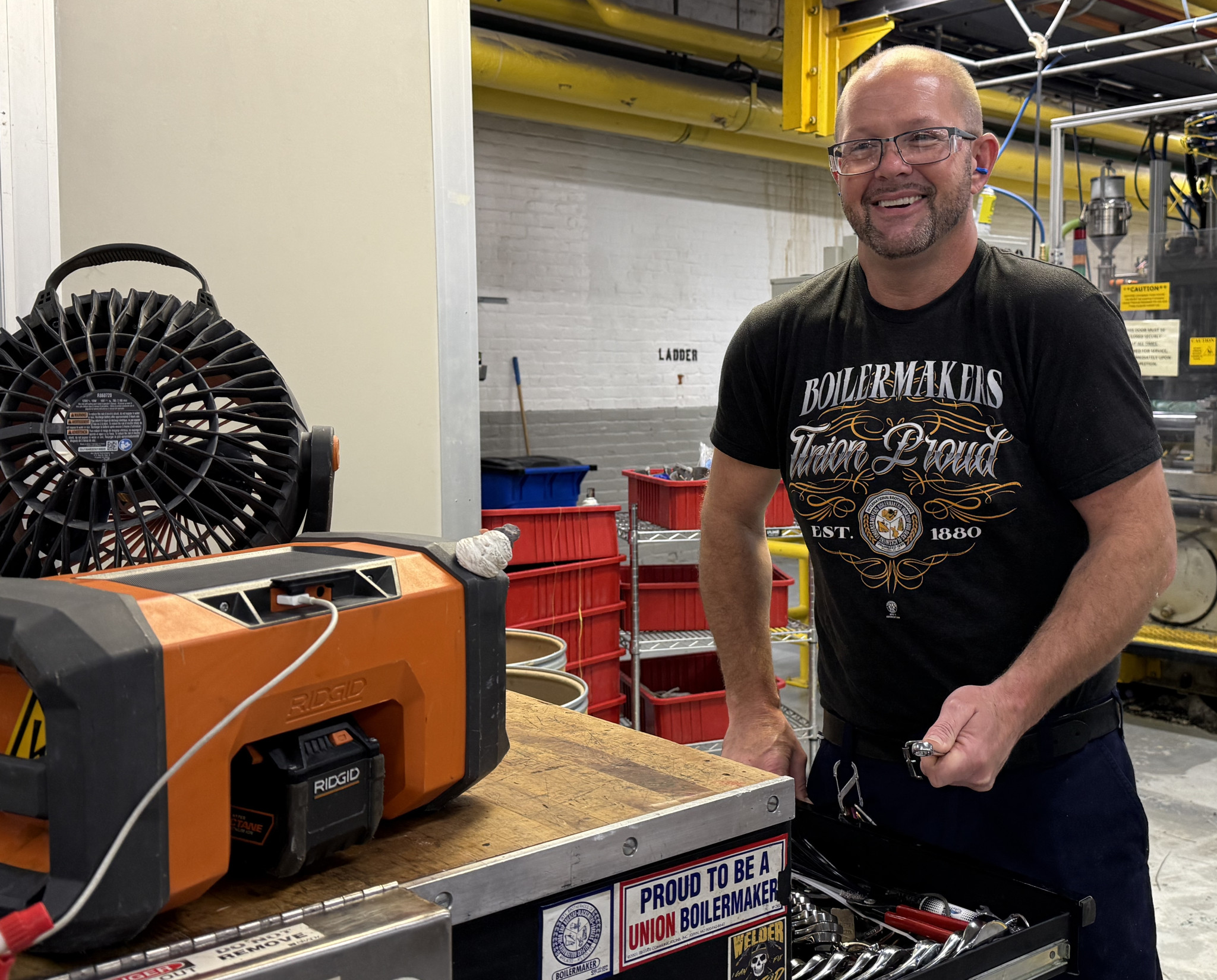


Wilhelia Guzman, Machine Operator
View Photo Gallery (9 photos)
Professional golfers around the world trust their game to the name Callaway. So, who does Callaway trust their name to—their reputation for consistency and cutting-edge “flies fast, flies true” excellence? Local 1851 Boilermakers in Chicopee, Massachusetts.
Boilermakers from L-1851 (Springfield, Massachusetts) have been working in the Chicopee facility that produces Callaway golf balls since 1982. When the union first organized there, the plant was owned by Spalding and produced a variety of sporting goods items, including Top-Flite golf clubs and balls. In 2003, Callaway purchased the Top-Flite brand’s assets, which included the facility. Callaway modernized operations and turned the plant into the advanced golf ball manufacturing facility it is today.
“You wouldn’t think of Boilermakers working in a golf ball factory,” says Marrie Francisco, who is a special inventory specialist and has worked in the facility for 27 years. “But we are part of the Boilermakers team, and we make golf balls.”
High-end golf balls. Some of the best in the world in an incredibly competitive industry.
“It’s a very competitive industry,” says Dave Melanson, Callaway’s Director of Product Engineering. “A lot of manufacturers make really good products, and what we’ve found is many times the advantages are in the margins. Thousandths of an inch can be the difference in good performance or a ball going offline or falling out of the sky.”
One of Francisco’s tasks is packaging and shipping balls to professional tour players worldwide. She says the tour players can tell what core is in the ball: “We need to make sure it’s right every single time.”
“It takes precision technology and precision, premium equipment to do that, as well as a highly trained workforce and a team to make that happen,” says Joe DeSantis, Director, Manufacturing, Callaway Golf.
Tee up the Callaway operation’s nearly 300 Boilermakers: from Francisco in shipping to her union brothers and sisters who prepare the core material, who move product from stage to stage, who maintain parts and technologically complex machinery and everything in between.
“Everything is detailed meticulously,” says Jason Belmer, who is a maintenance materials expediter. “From the operators to the setup techs to the specialists, down to the packing line. If one of these departments isn’t working right, it’s going to alter every department after it. Teamwork is a big thing here at Callaway.”
And union solidarity is a major factor in the strong teamwork culture.
“Basically, that’s what the Boilermakers do,” Francisco says. “We’re here to help each other. To build each other stronger.”
Adds Belmer: “At the end of the day, we’re all one solid team. Solidarity. Which is what the union is all about, solidarity.”
On the management side, DeSantis agrees: “It’s a great union shop, and we work in unison together every day.”
Teamwork and solidarity create a desirable workplace, and jobs at Callaway are prized in Chicopee. Belmer, for example, first came to work at the company as a temp, having relocated to the area and previously working at a piano factory. After a month, he was just one out of about 30 people to get hired full time. It’s not uncommon for Boilermakers to have worked at the facility for decades.
Melanson says collaboration is one of the keys to maintaining a good work environment and retaining a good workforce—learning from people and mentoring people “to make a really cool product and hopefully make us a place they want to keep coming back to 40 hours a week. That’s meaningful.”
It’s meaningful to the people who work at Callaway and to the end product they ship out the door.
“The knowledge and experience and commitment people have here to understand that the craftsmanship matters, the attention to detail matters, and taking that seriously—that’s what makes a good product,” Melanson says. “Callaway has recognized the value that gets poured into our product by having it here in Chicopee. The long tenure of many people here and the experiences and the ability to pass that information and knowledge on to the next generation that’s coming in the door—that’s a sustainable thing.”
But it might not have happened. Before Callaway came onto the scene, there was fear that the prior operations would move overseas, according to Francisco.
“But Callaway invested in us. They invested in our people,” she says. “You need that in the United States. It’s what we’re supposed to do.”
And when she and her Boilermaker co-workers see that union-made, American-made Callaway ball on the tee, televised worldwide during a pro tour—the ball they made—there’s well-earned pride.
“When we watch on TV and we see it, we’re proud; very, very proud,” she says.
“We make one of the best golf balls in the world, and that’s something to take pride in. It’s a big, big deal,” Belmer says.
It’s not just pride in the product, but also the work itself.
“There’s pride in what you do,” he says. “There’s pride in how you work with people. There’s pride in what you present to the company as well, and pride in the work you do when others aren’t looking, too.”
And that’s what makes Callaway golf balls the best.
Meet some of the L-1851 Boilermakers who make Callaway Golf Balls