What we did in 60 years building electrification, we are going to need to double in the next 30 years. We are on the precipice of a changing energy environment.
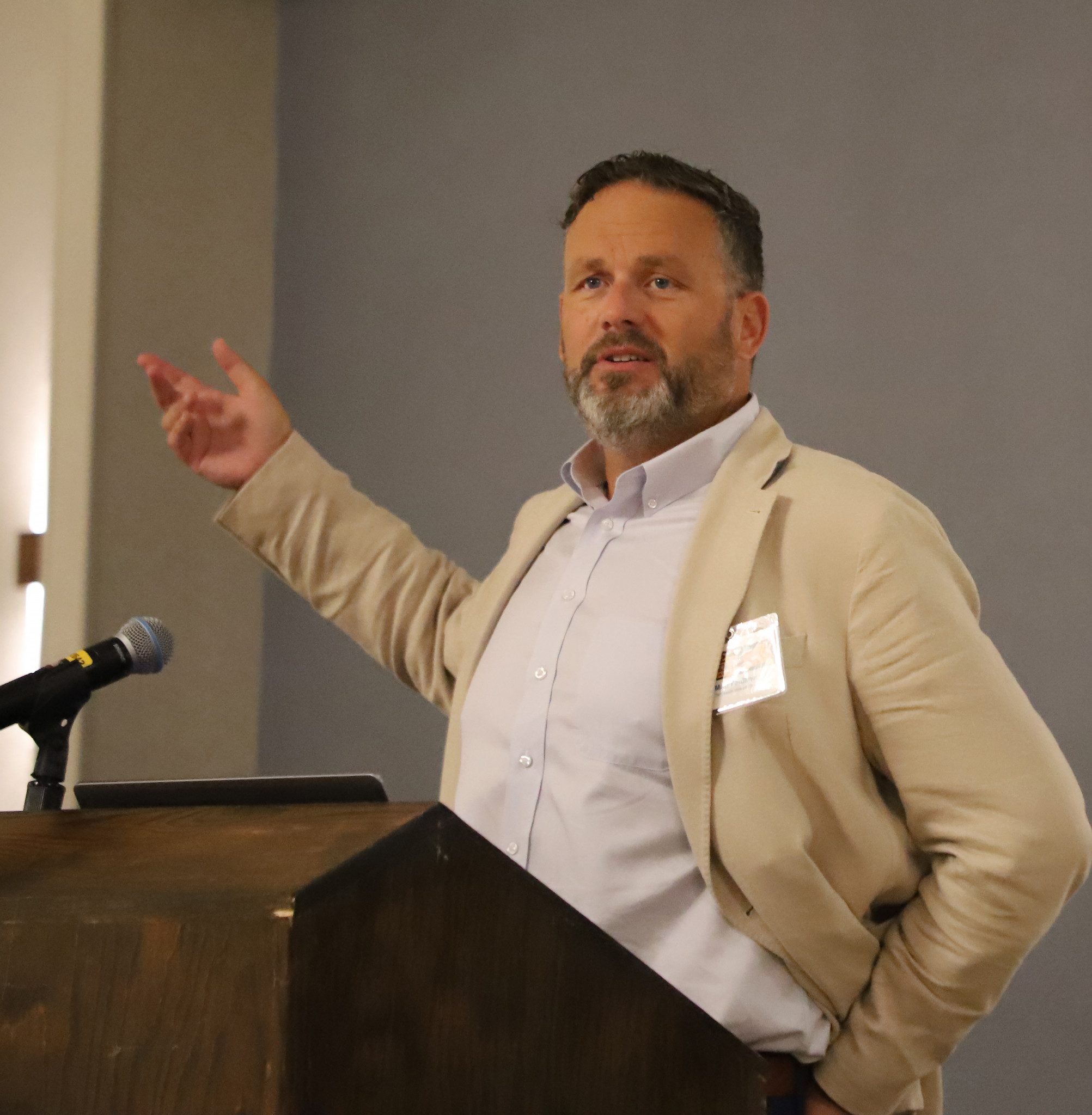
TVA Director of Labor Relations Matt Faulkner discusses the urgent need to recruit the next generation of union trades workers.
The energy demand driven by data centers’ power-supply grab continues to dominate conversations among Boilermakers, contractors and employers in Construction Sector Operations. It was a key topic at the Ohio Valley Tripartite in Lexington, Kentucky, July 16, as participants addressed construction growth and the need for reliable Boilermaker manpower. Attendance at the conference increased by about a third over the previous year.
According to Matt Faulkner, Director of Labor Relations for the Tennessee Valley Authority, TVA alone will need to double its energy output. TVA has myriad construction projects in process or in the wings, and they need Boilermakers, pronto. Mike Murphy, a consultant with Murphy Business Solutions, said the energy-demand increase is so pervasive, one could throw a dart toward a map of the U.S. and be guaranteed to hit an area in need of 25%, 50% or more in increased energy output.
“Demand growth is increasing, and it’s increasing significantly,” he said.
“We know the work that’s coming in the next 10 years. We know that what we did in 60 years building electrification, we are going to need to double in the next 30 years,” Faulkner said. “We’re on the precipice of a changing energy environment.”
That’s good news for the energy industry—if there are enough skilled trades workers to man the work needed to achieve it. Faulkner noted that with abundant work and with 71% of people under age 35 showing favor toward unions, the time is ripe for trade union careers.
TVA is exploring solutions with all trades. For one, they are pushing for a more aggressive use of apprentices, encouraging contractors to use more apprentices. Faulkner pointed out that TVA has run for too long relying on older journey-level workers. They’re also working on a pilot program with North America's Building Trades Union that will help young adults aging out of America’s foster care system enter apprenticeship programs. And, they’re focusing on retaining workers at TVA by ensuring jobsites are good environments, workers are taken care of on the job and pride is purposefully instilled—so the workers they attract to the job and the career path want to stay.
“It’s hard work, but this opportunity is generational. There are boilermakers working today whose grandparents and great-grandparents worked on TVA projects.
Brandon Buckle, Site Construction Manager for American Electric Power, also addressed the issue of manpower. He noted that AEP is more engaged with the building trades than ever before. He said talking at Vocational Technical schools about what the trades actually do is vital to recruitment, as is showing students what jobs really look like inside power plants and what these jobs ultimately provide for them in their own homes—lights, heat and air conditioning.
His own career path began as a construction sector Boilermaker.
“It was the best decision I ever made,” he said. “I got to where I am today because of the Boilermakers. I’d influence any kid to explore that opportunity.”
Buckle is working with Enerfab on presentations he can take to Vo-Tech schools and on opportunities to bring students onto plant sites and projects to see firsthand what a contractor does and how they utilize different crafts. He wants students to visualize the future they can have working in the trades.
“We’re getting buy-in to bring vo-tech kids into power plants, get them out on the 19th floor and show them what the heat feels like in there,” he said. “We want to show them what goes on on a day-to-day basis. The craft is the future.”
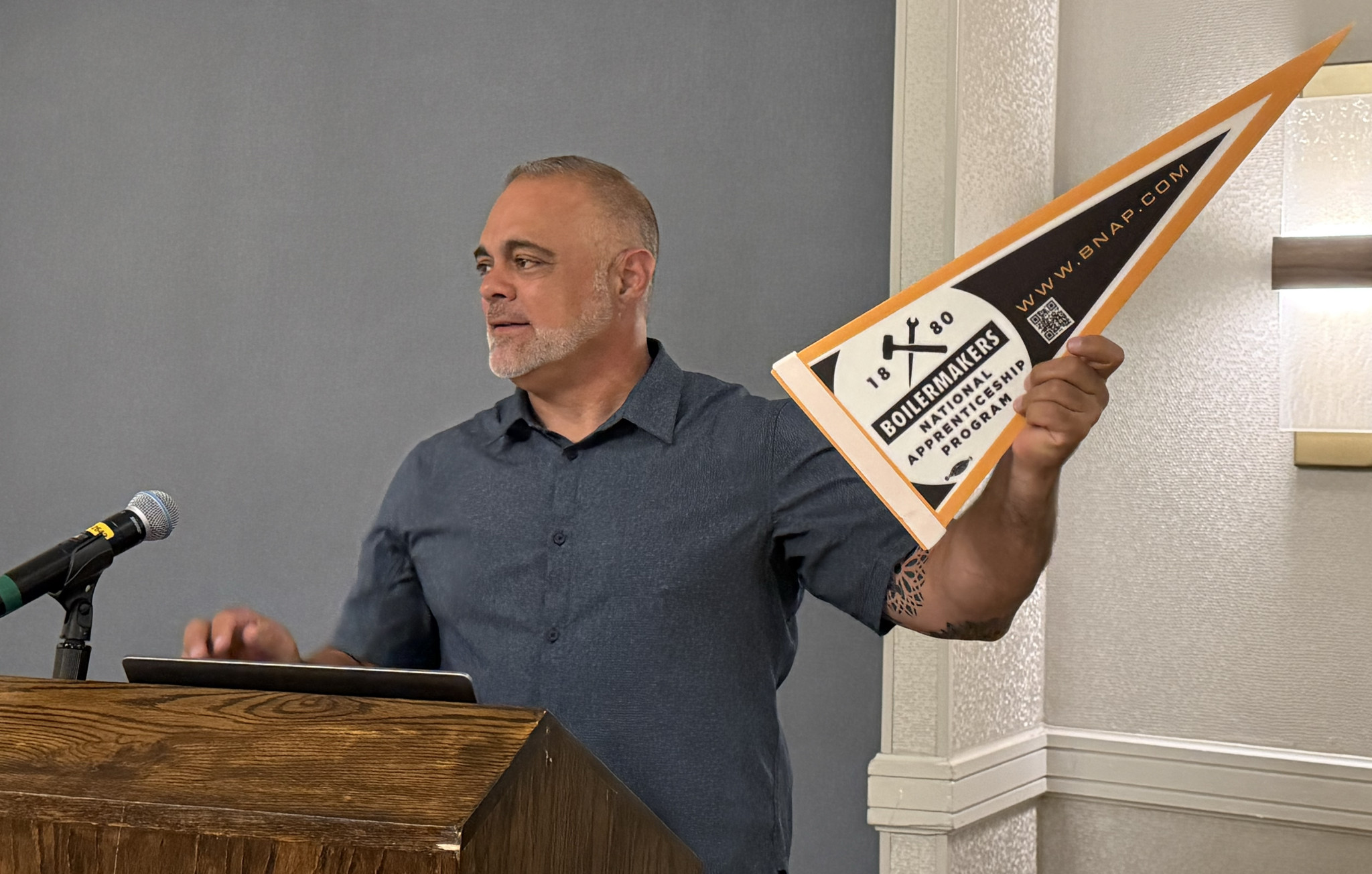
Mark Wertz, National Coordinator for the Boilermakers National Apprenticeship Program, stressed BNAP’s focus on recruitment. BNAP has updated its curriculum and created short videos breaking down Boilermaker skills. They’ve also set up exhibit booths to put the union Boilermaker career in front of good apprenticeship leads at major events, including the SkillsUSA national competition, FFA’s national convention and the American School Counselors Association’s annual conference. At ASCA, Wertz handed out pennants advertising the Boilermakers union and with a QR code linking to the BNAP program—a pennant high school guidance counselors can display on their walls along with pennants from colleges and universities.
IVP-Canada Arnie Stadnick gave an overview of recruitment in Canada, noting that local lodge tactics are key and allow locals to address nuances unique to their areas. He said technology, such as geofencing, is being used at the local lodge and national levels to promote the Boilermaker trade.
“Obviously, the theme here is recruitment,” quipped Ohio Valley Tripartite conference organizer and International Rep Dan DeCarlo.
Additionally, Nathan Hyrne, Director of ClimateBright US-East for B&W, gave an update on clean energy strategies and the current state of regulations. He said that with the new administration's Environmental Protection Agency killing regulations and the previous administration’s clean energy programs, incentives will be the only industry drivers. B&W has several ClimateBright initiatives in production or on tap, including a BrightLoop Hydrogen production facility in Massillon, Ohio, and projects in Baton Rouge, Louisiana, and Gillette, Wyoming.
International President Timothy Simmons addressed the issue of recruitment, the union’s future and the tripartite concept.
“We are committed to working with you,” he said, addressing owners and contractors specifically. “Every job opportunity—every hour a Boilermaker is able to work—that’s somebody out there working to put their kid through college, make a car payment or a mortgage payment. We are truly committed to bettering our craft, to developing new programs and to growing our union. We know there are contractors who would bid more work if they knew we could staff it.
“We need to know what you’re seeing so we can better service this industry. If you don’t have work, we don’t have work.”