Where we are now is a far cry from where we were in 1942, but I think if we could go back and revisit those eras, the lessons are there.

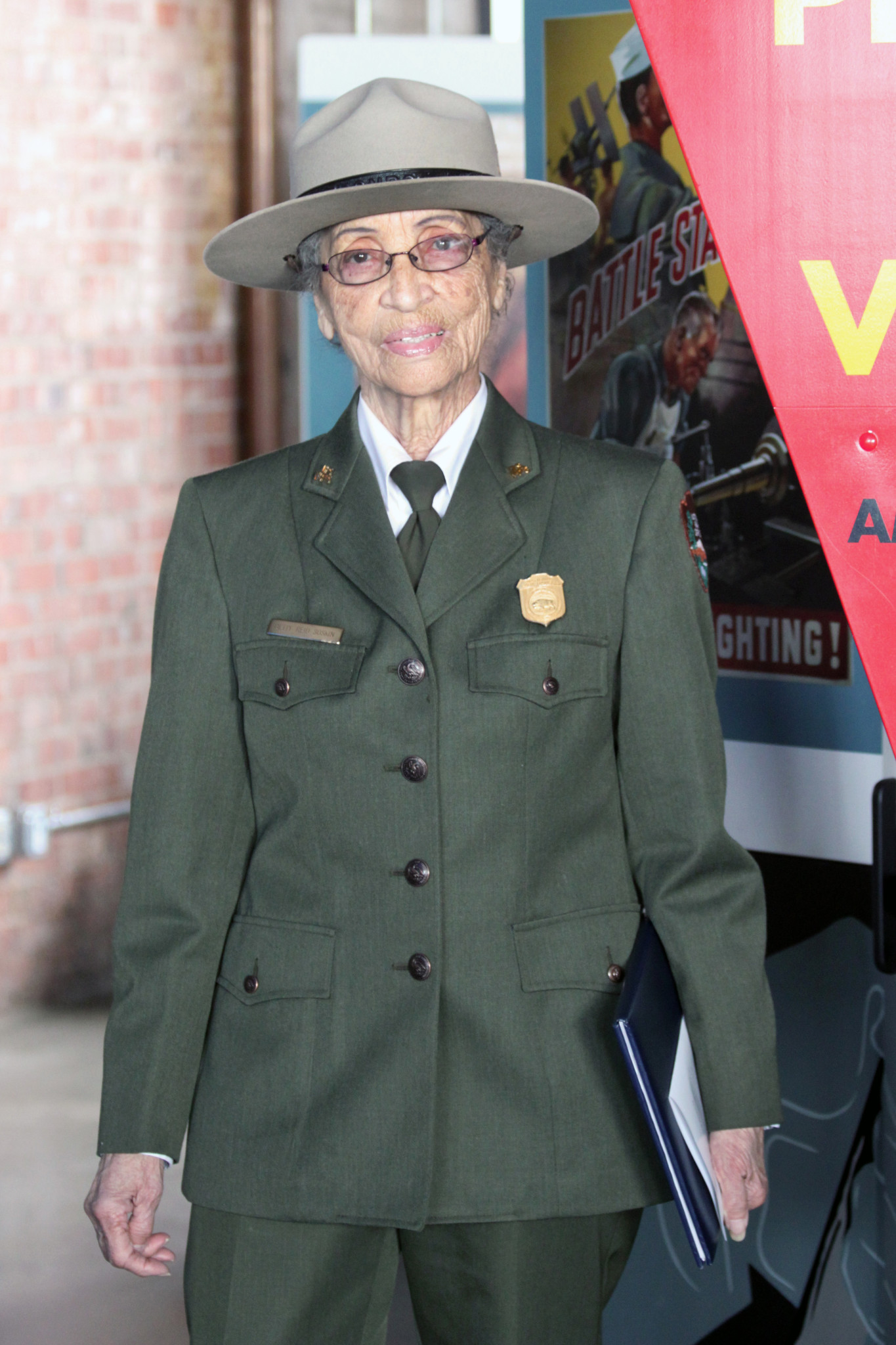
Betty Reid Soskin, who had special ties to the Boilermakers union, died Dec. 21 at age 104.
Betty Reid Soskin, the nation’s oldest National Park Service ranger and a respected interpreter of American labor and World War II history, died on Dec. 21, at the age of 104. Her long life included a meaningful chapter with the Boilermakers union at the height of World War II, during wartime production.
In 1942, Soskin worked as a file clerk at a Boilermakers union hall in Richmond, California, serving shipyard workers who were building Liberty and Victory ships essential to the war effort. Her responsibilities included maintaining employment records and handling administrative work that supported thousands of workers fueling industrial wartime mobilizations. The hall, Boilermakers Local A-36, operated as a segregated auxiliary lodge, a reflection of the era, and Soskin’s role placed her directly inside the labor movement at a pivotal moment.
Though she was not a shipyard worker herself, Soskin later spoke about how that experience deepened her understanding of labor, patriotism, the unseen work that sustains large movements and her passion for civil rights. The Boilermakers union acknowledged her contributions and preserved her story as part of its World War II legacy. Her life is a reminder that labor history is shaped not only on the job site, but also by those who supported and documented the work behind the scenes.
Soskin’s work with the Boilermakers was just one of her many life adventures. As a songwriter, she penned protest songs for the Civil Rights Movement. She and her husband, Mel Reid, founded Reid’s Records in Berkeley, California. Soskin later worked as a field representative for a California state assemblywoman and then became involved in the planning and development of a park to memorialize the role of women on the home front during WWII. Eventually, Rosie the Riveter World War II Home Front National Historical Park was born. Soskin left her state job in 2003 and became a consultant at the park she helped plan. In 2007, at age 85, she became a park ranger for the National Park Service, retiring just after her 100th birthday.
In the mid-2000’s the Boilermakers union commissioned a film to capture and share Soskin’s story as a woman of color working in an auxiliary local and her role bringing history to life as a park ranger.
“Where we are now is a far cry from where we were in 1942,” she says in the film. “But I think if we could go back and revisit those eras, the lessons are there.”
She remains an icon to tradeswomen and to the union’s history.
“The Boilermakers have never forgotten our history, thanks to great women leaders like Betty Soskin,” said J. Tom Baca, IVP-Western States. “We owe her a lot.”
The Western States Section developed a special relationship with Soskin over the years and became a major supporter of Rosie the Riveter programs.
“It was a tremendous honor to know her, to call her a friend and to learn from her,” Baca said.