We work better when we work together.
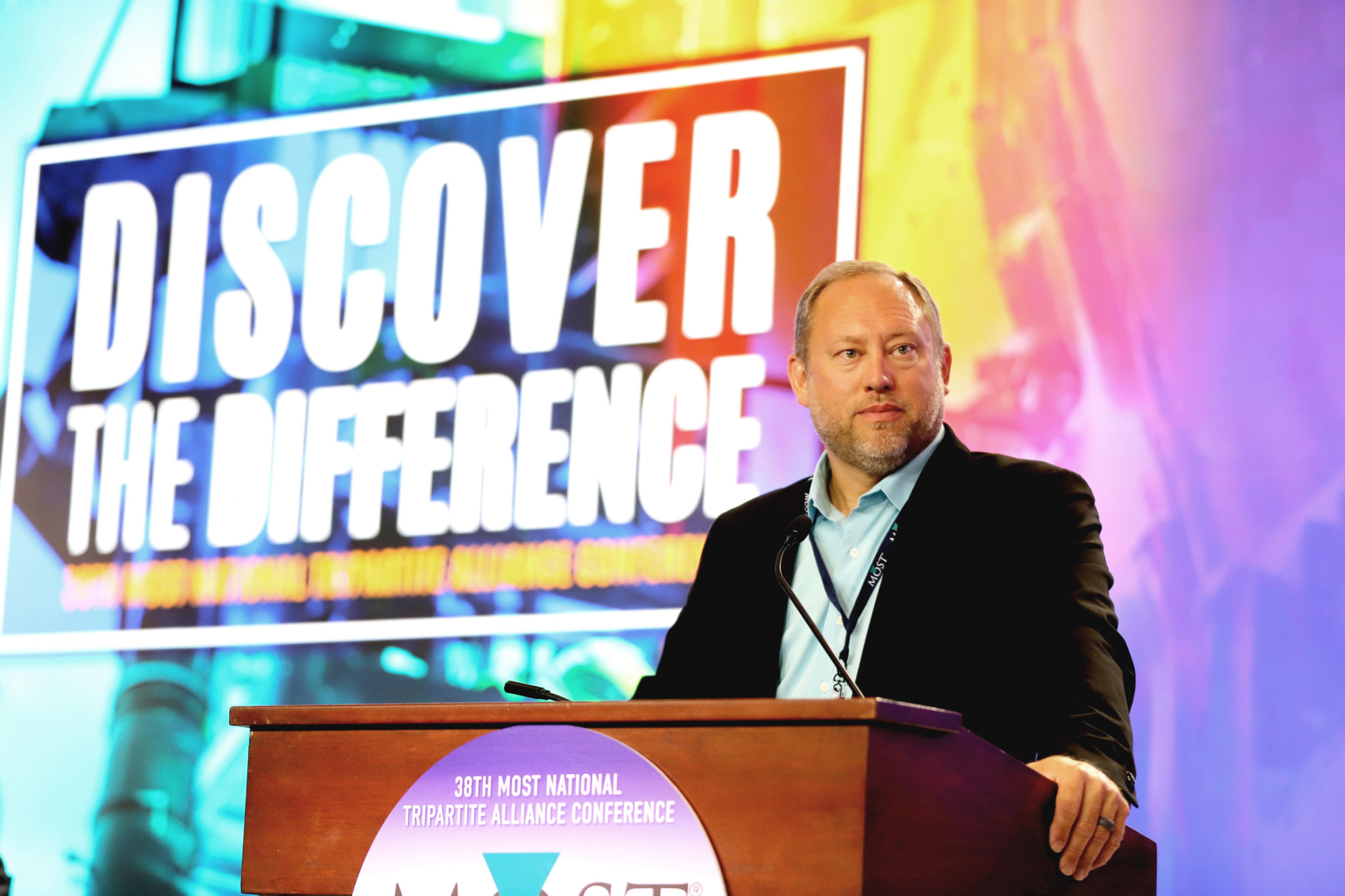
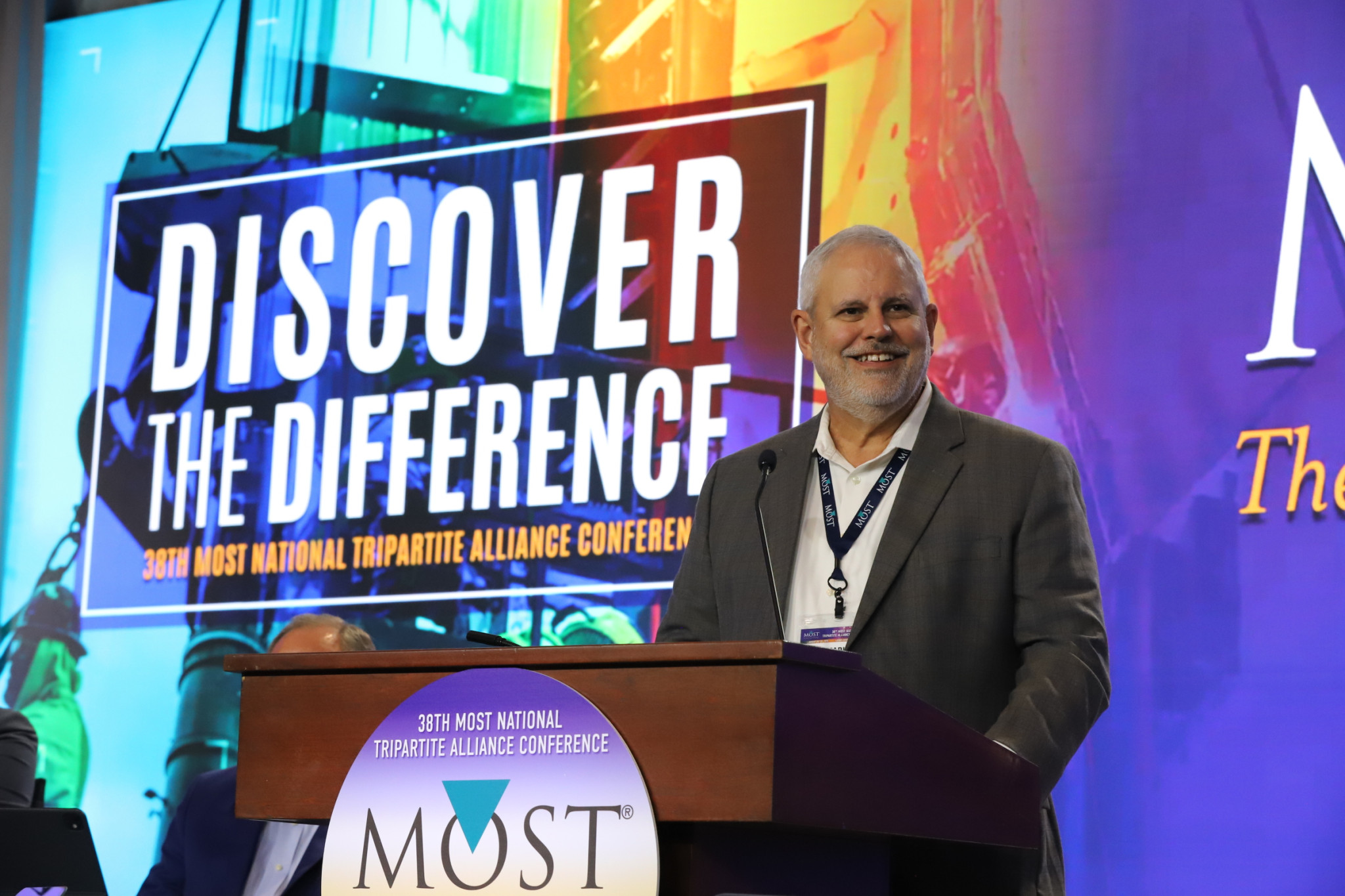
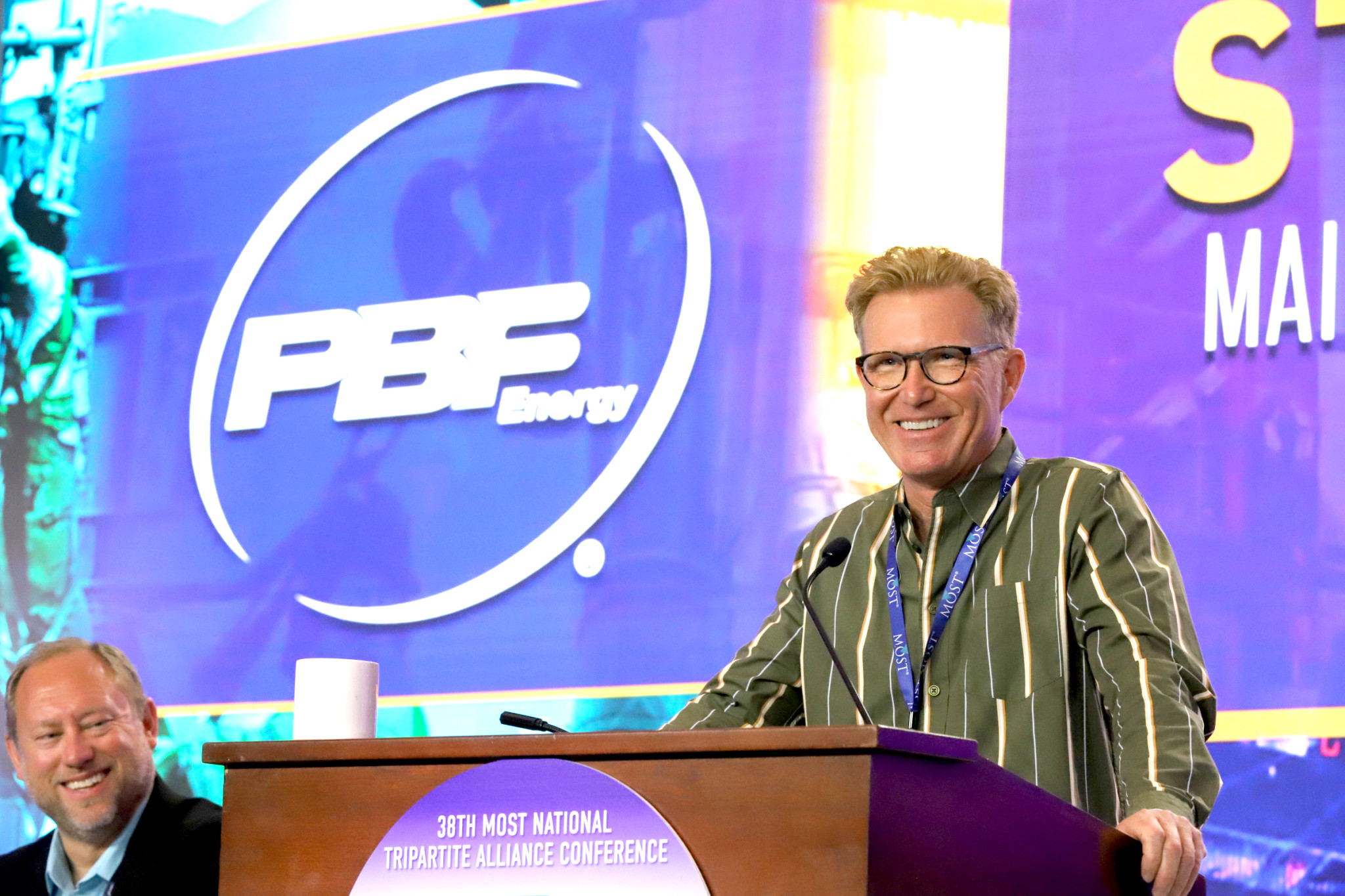


Timothy Simmons, International President
View Photo Gallery (10 photos)
At the Boilermakers’ 38th MOST Tripartite Alliance conference in Coronado, California, Aug. 26 and 27, International President Timothy Simmons greeted attendees with a forward-looking vision built on partnership, innovation and a renewed commitment to workforce excellence. He emphasized that the core purpose of the conference was to build and strengthen the essential relationships between the union and industry partners.
“That’s what this whole conference is about. It’s about growing relationships,” he said. "I guarantee we can solve more problems sitting at a table eating dinner together than we ever could in a boardroom sitting across from each other, going over grievances and arbitrations. We can handle a lot of these things in-house simply by building our relationships with each other.”
Simmons detailed the union’s strategic MOST Programs framework—Mobilization, Optimization, Stabilization and Training—with a focus on training and recruiting the next generation of skilled workers.
“For the first time in many years, we’ve hired recruiters,” he said. “We’ve also encouraged our apprenticeship to do the same.”
The union's training strategy is driven by the needs of owners and contractors, Simmons said. He directly addressed industry challenges, including the manpower shortage, urging open communication about future projects to ensure the union can staff them with qualified personnel.
Simmons emphasized the value of investing in skilled workers. “You’re not going to get skilled labor cheap,” he said. “But we more than make up for it in productivity, safety and the ability to do any job you put us on.”
He called for mutual respect and innovative collaboration, reaffirming that the Boilermakers remain the craft of choice for solving the challenges facing the industry.
“We work better when we work together,” he said.
Following are additional conference topic summaries:
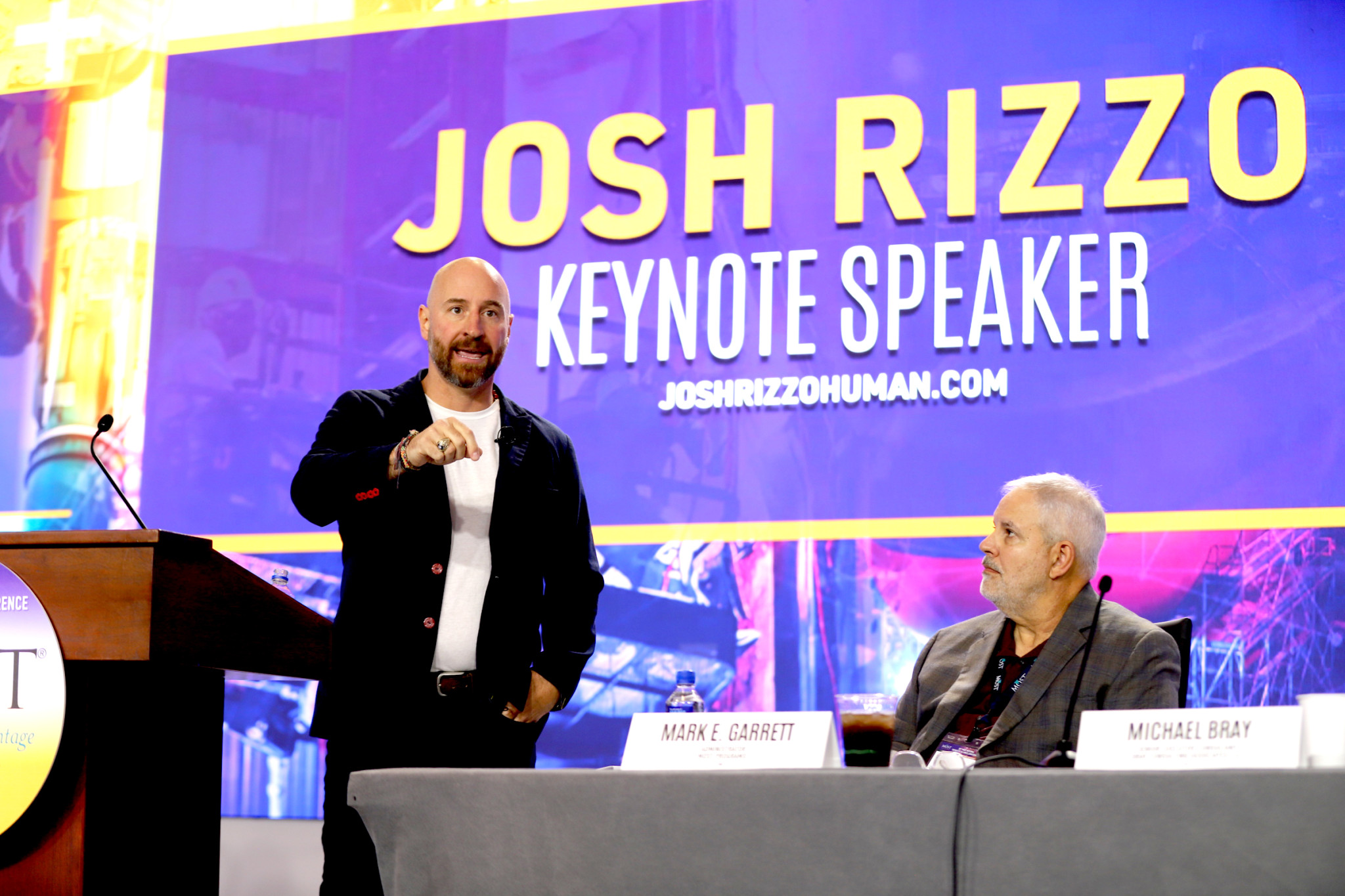
Guest speaker Josh Rizzo, a veteran who has battled anxiety, depression and trauma, spoke about his experience and how he turned his personal struggles into a mission to help people recognize the power of prioritizing mental health. Rizzo pointed to sobering statistics from 2023: the construction industry lost an average of three workers per day to jobsite fatalities, while 14 people died each day by suicide and 44 from overdoses.
“That’s 58 deaths a day connected to how we’re feeling,” he said. “There’s a lot we can do to address it. It starts with us. In how we look at things and show up for each other.”
He encouraged people to be kinder to themselves, noting that while many offer encouragement to others, they can be their own harshest critics.
Rizzo said setting perspective is another daily practice. “The most important decision we make each day is to be in a good mood,” he said.
MOST Programs continue to improve and add new components to address industry needs, create efficiencies, provide solutions and ensure Boilermakers are prepared to go to work at any time.
"Since its inception in 1989, MOST has partnered with owners, contractors and partners,” said Mark Garrett, MOST Programs Administrator. “We are constantly striving toward our common goals of meeting the construction industry needs now and in the future."
Among the 17 programs MOST features, the substance abuse program has an especially impressive track record. MOST’s mental health program continues to improve and develop new material.
Reporting on training programs from 2024, Garrett noted that online training offered for OSHA 10 and OSHA 30 was significantly higher than in-person training options. The online options are making it possible for more Boilermakers to take the training.
Steve Giffin, Maintenance, Turnaround, and Construction Department Manager, PBF Energy Martinez, California, talked about the energy-industry challenges in California and how politics are stymying opportunities for refinery development. Boilermakers have been lobbying industry owners in the state capitol to change the narrative.
“Maybe the message we’re delivering with the Boilermakers is making a difference,” he said, showing headlines touting California Governor Gavin Newsom’s pivot to embracing “big oil.”
“The concept of win-lose poisons the mind. It's a different way to look at things when you say: ‘Why don't we both win?’ It’s better when we both win. That's what working together is. That's what success is. There’s always going to be room for us to improve. This is the way we work together in the tripartite, looking for the win-win-win.”
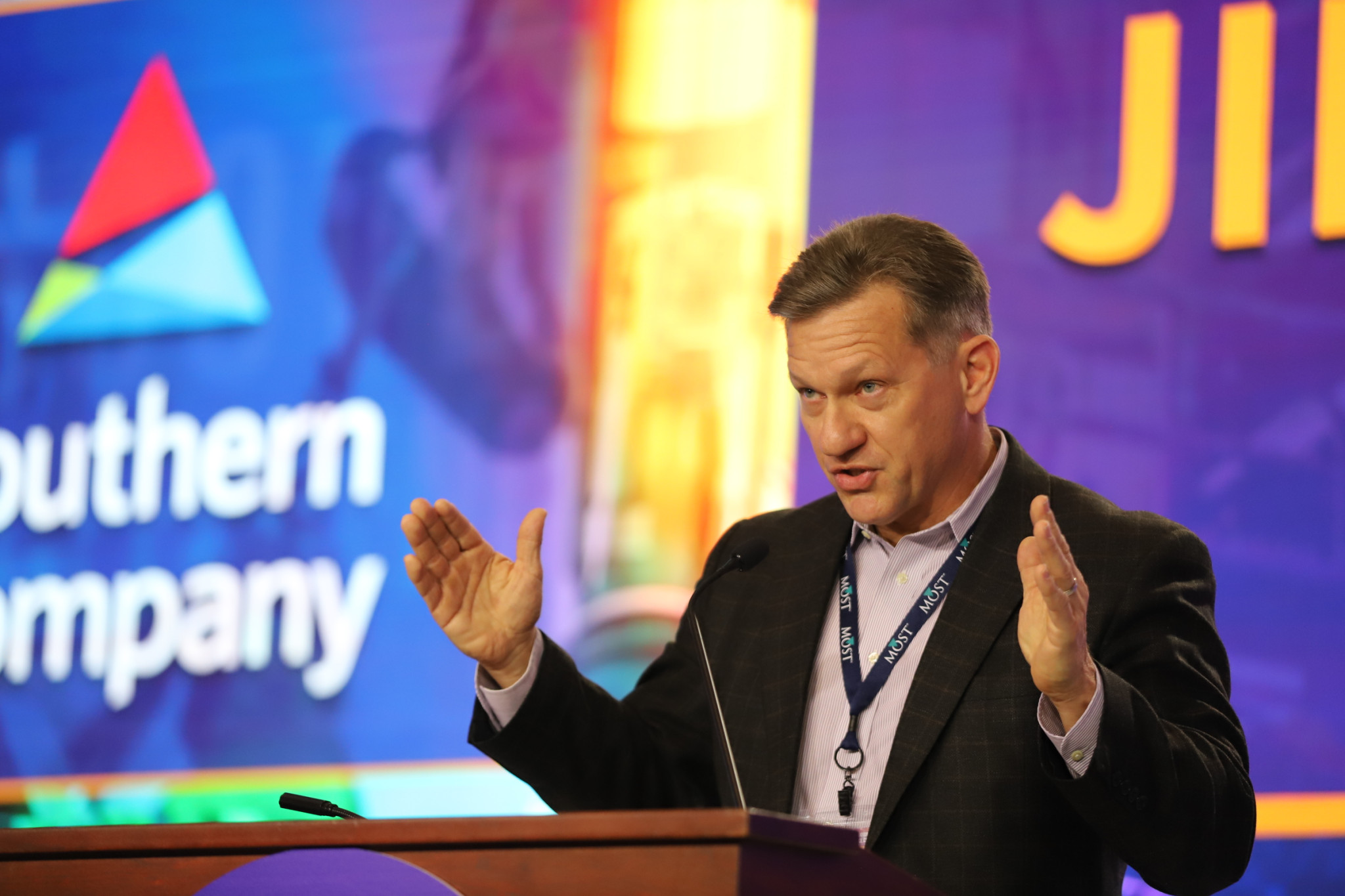
Southern Company’s long-term energy plans mean big opportunities for union craft labor, with Boilermakers set to play a pivotal role in upcoming projects in the South.
“I’ve always admired the Boilermaker trade,” said Jimmy Farmer, Craft Labor Manager for Southern Company. “You’re the most versatile out there. There’s not a lot the Boilermakers can’t do.”
The utility, which serves millions of customers across the Southeast and beyond, is maintaining a diverse energy mix that includes natural gas, nuclear, coal and renewables. While coal plants were once slated for retirement, Farmer said the company is now extending their lifespans, creating new maintenance and repair work.
Farmer said Southern Company plans five new combined-cycle gas units in the next five years, with more projects expected in Georgia, Alabama and Mississippi.
“There’s going to be a lot of opportunities for the trades,” Farmer said. “We’re going to need a lot of people—a lot of Boilermakers—to do a lot of work through 2033 and beyond.”
Farmer pointed to positive developments in labor relations. Two plants, Scherer and Yates, recently transitioned to union after decades of being maintained by nonunion contractors.
“Boilermakers played a big role in making that happen,” he said. “We’ve never seen the Boilermakers so engaged.”
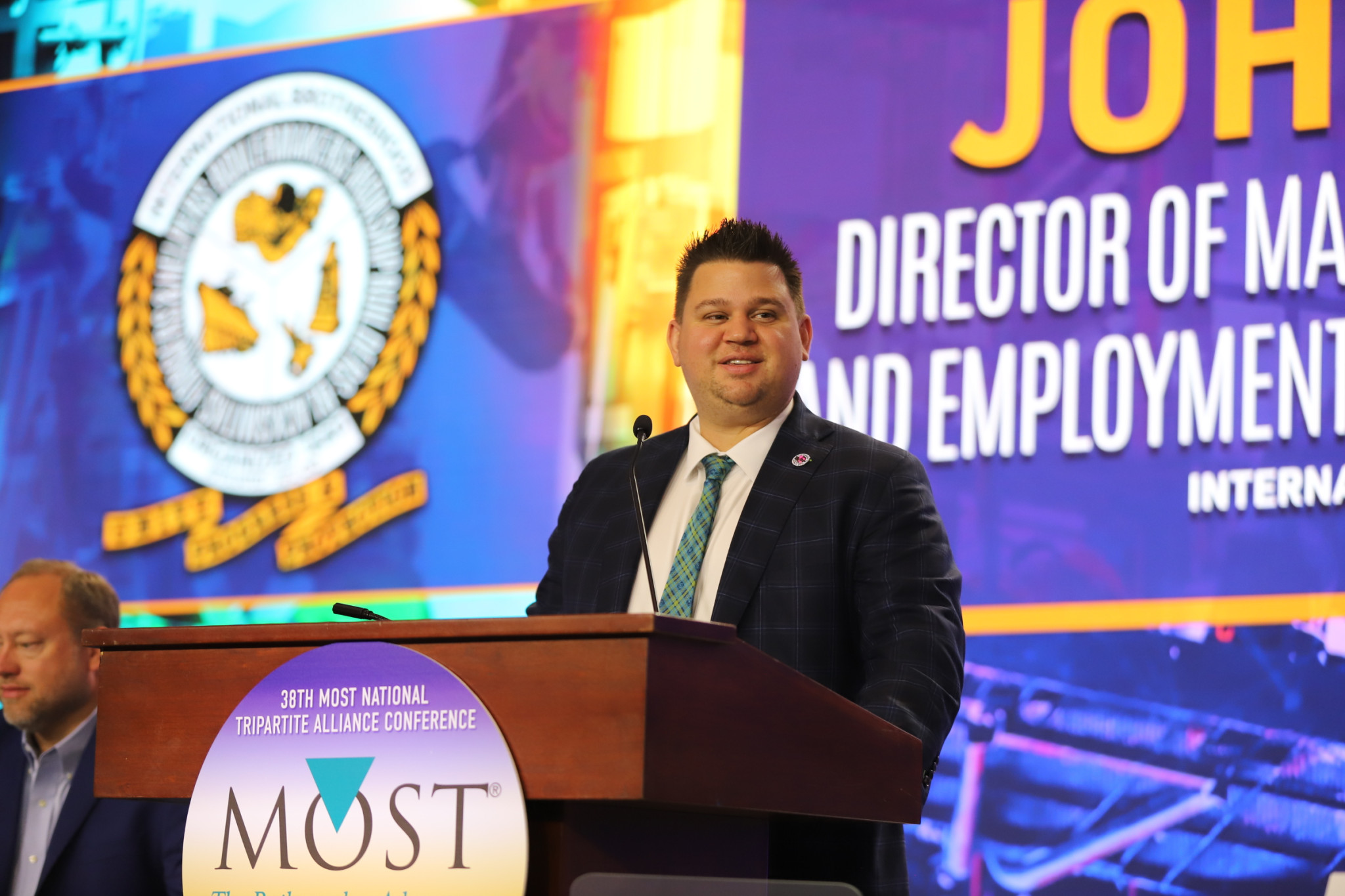
After decades of declining membership, the union is reversing course with renewed growth, stronger training programs and a push for fully staffed projects, according to Johnny Baca, Director of Marketing, Organizing, Recruiting and Employment Work Fund Initiatives.
“It’s not easy to create something new,” Baca said. “It’s much easier to protect what we have. It’s much easier to be complacent. The Boilermakers are breaking the status quo. The Boilermakers are growing for the first time in 20 years.”
The union is setting measurable goals, tracking progress and focusing on recruitment. Those efforts are already showing results. The Boilermakers have added 1,000 new members this year, increasing man-hours by 5 million. Baca said the union is positioning itself to meet industry demand. Looking ahead, the union has set a bold vision: multiplying its current membership tenfold.
“Playing it safe is one of the riskiest things to do,” Baca said.
Director of National Recruitment Services Monte Causey, Southeast Recruiting and Training Coordinator Mike Autry and Director of National Training Services Jeff Hughes shared updates on Southeast recruiting initiatives. Training remains a key focus. The Southeast launched a tube welding initiative offering three weeks of instruction for certified plate welders, with financial incentives for those who pass Common Arc testing. The effort, supported by M.O.R.E. Work Investment Fund dollars, has already produced 34 new certified tube welders.
Boilermakers, contractors and owners met in separate caucus sessions to identify chief concerns to bring before the conference. All three groups flagged manpower, recruitment, training and jurisdiction.
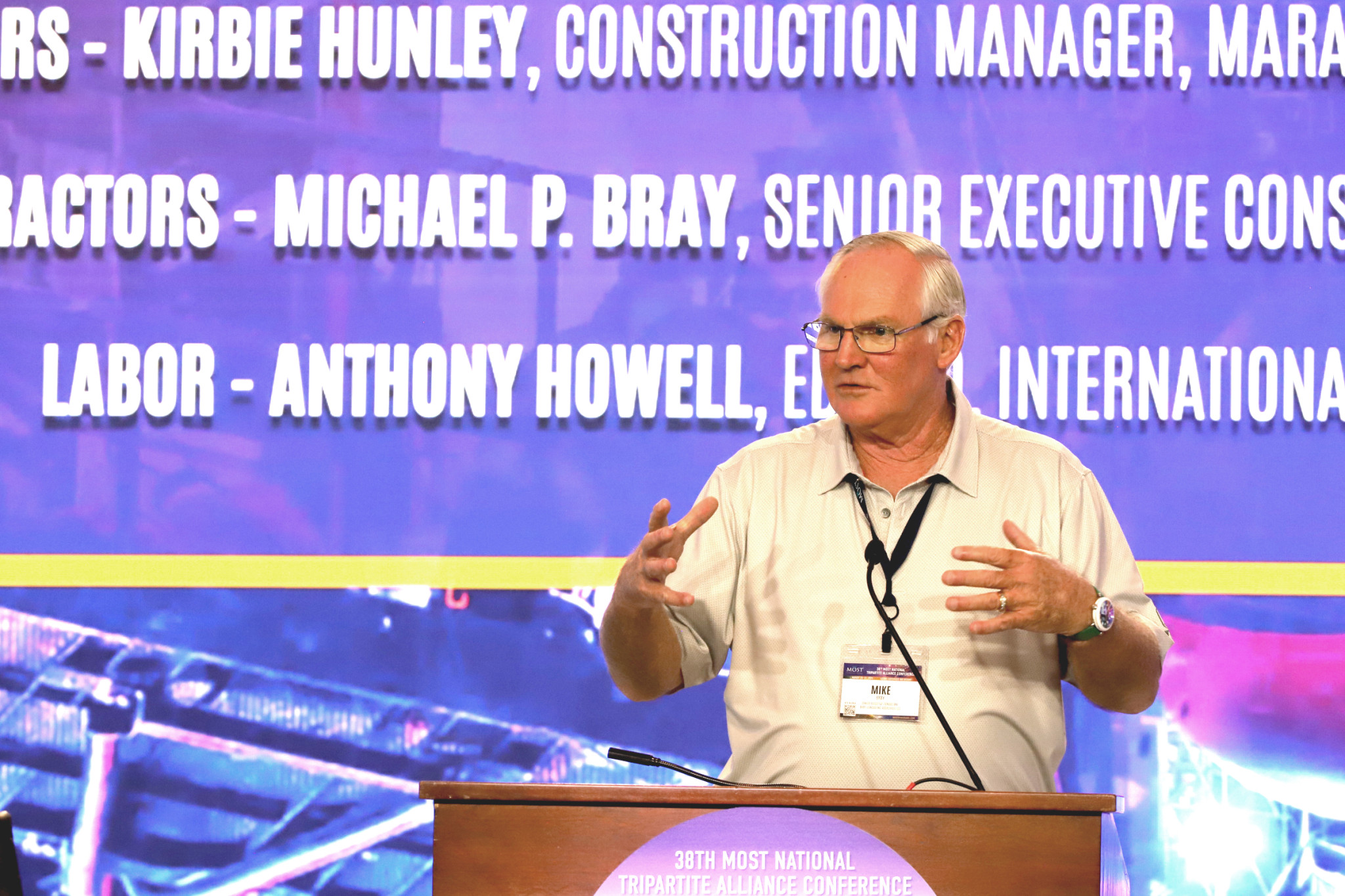
“We heard from a speaker a few years ago at this same conference in Marco Island that we would be 350-400% short union and nonunion craftsman at this time, and we need to step up recruitment,” said contractor caucus chairman Michael Bray, Senior Executive, Consultant Bray Consulting Associates, LLC.
Bray said it’s not enough just to recruit more Boilermakers—efforts also must be made to retain them and continue developing training.
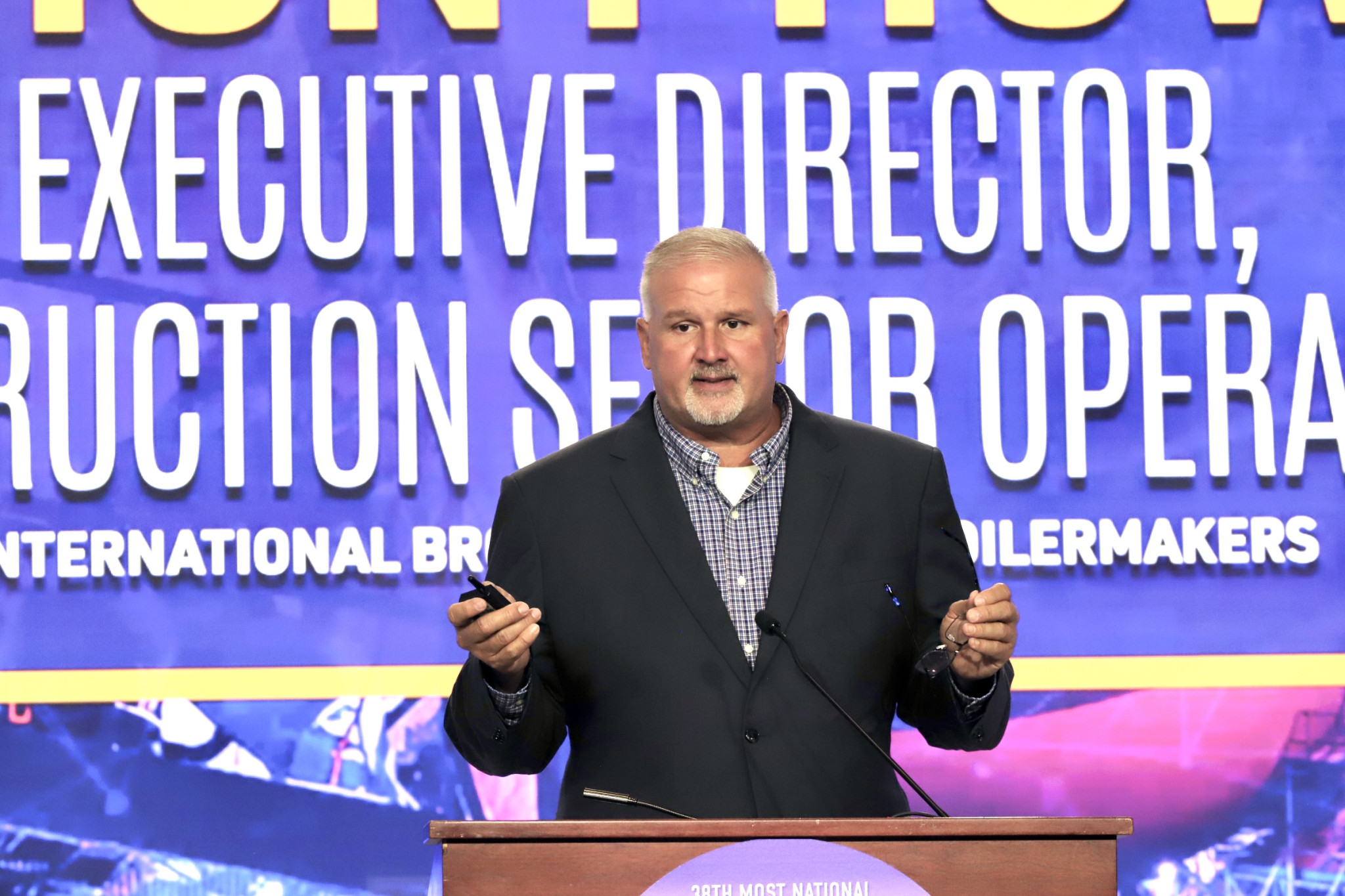
"We are 100% committed to recruiting and training,” said Boilermaker caucus chairman Anthony Howell, Executive Director-CSO. “We see the outcome and what's coming in the next year, and we’re going to need manpower.”
Owner caucus chair, John Burnett, El Segundo and Salt Lake City Turnaround Manager, Chevron, said owners are impressed with the Boilermakers training programs and the reliability of Boilermakers.
“A common theme across the owners in the owners’ caucus was that when Boilermaker show up, they show up to work,” he said.
All groups are concerned about jurisdiction. Howell said the Boilermakers and other crafts need to be included in discussions to determine proper jurisdiction.
As the union, contractors and owners grapple with how to staff a glut of upcoming projects, the Western States Section is developing a program that centralizes safety and training requirements for all job facilities and incentivizes Boilermakers keep up certifications and training. They are developing a web-based app and desktop portal that will serve as a one-stop resource for Boilermakers. Formerly known as the Readiness to Work program, the initiative is now called the BEST Program, which stands for Boilermakers, Education and Skills Training.
“The big challenge for all of us as contractors is the same challenge the union has and the same challenge the owner has,” said Ed McWhorter, General Manager, Babcock & Wilcox.
He explained how background checks, specialized or unique jobsite training, drug tests and more take time and can slow down putting Boilermakers to work. The BEST Program poises Boilermakers to be prepared to work any planned outages, turnarounds and emerging work as soon as its available.
Through an app, a Boilermaker will be able to see upcoming jobs, the requirements for those jobs and schedule any needed training. After the training is completed and verified, the Boilermaker is provided a stipend via a third-party administrator to cover some training travel costs.
The program is expected to be fully operational in 2026.
Other speakers and topics included:
NACBE Executive Director Ron Traxler gave an overview of what NACBE does and how it fits into the tripartite concept.
“NACBE members are resolute that safety is paramount,” he said. “We collaborate with MOST and area training centers to educate about safety and develop safe work environments.”
The NACBE Safety Committee has regular meetings and roundtable discussions to discuss safety issues, and at events such as the National Tripartite Alliance conference and informal settings. NACBE relies on contractors, owners and Boilermakers to talk about what they see on jobsites and how safety can be improved.
Bank of Labor is charting record growth while strengthening its commitment to organized labor, BOL Chairman and CEO Bill Miller said. In 2024, the bank faced an “unprecedented issue” that forced a rapid relocation of its headquarters. Despite the disruption, Miller said, the bank reported record earnings, record loan growth and resumed paying shareholder dividends for the first time in 20 years.
Boilermaker National Apprenticeship Program Coordinator Mark Wertz outlined training initiatives and recruitment strategies aimed at strengthening the workforce and reaching the next generation of Boilermakers.
Jeffrey Hughes, Director of National Training Services discussed the successful boot camp program, with a 90% national average success rate of participants completing the program certified with contractors.
Director of Government Affairs Cecile Conroy shared legislative issues impacting Boilermakers and the industries in which Boilermakers work. Big topics include the Protect the Right to Organize Act, the Protect America’s Workforce Act, measures in the Tax Reconciliation Bill and tariffs.
The Boilermakers’ National Transient Division held its first-ever conference this year, drawing 30 contractor representatives, Director of NTD Services Shon Almond said. The division now has 571 members. The division will host tank training classes in Hartsville, Tennessee, in December and January.